
Tap fast to fill the meter. Reach Pralay for a storm of leaves.
Swipe or tap the jungle to play with the leaves. Catch the golden ones.
Bug, idea or a fact to fix?
प्रमाण · Pramaan
Twenty-four proofs. Your clicks set them free.
The six colours and what they mean
India banned its own plant in 1985. Every click is a vote to bring cannabis back under the law.
Two doors · one movement
Both names say it: legalise cannabis, now, in India
पदक · Padak
Medals
Win them by clicking, staying live, keeping your streak and leading your state.
आभा · Aura
Button auras
Win them from kalash pots, quests and medals. Tap one to wear it.
ज्ञान कोश · Gyaan Kosh
Twenty teachings, unlocked by your support
Each one rises from the bottom of your screen the moment you earn it, and stays here.
सूक्ति संग्रह · Sukti
Sayings you have collected
A new saying rises from the bottom of the screen every few dozen clicks.
लाइव · Live arena
States, cities and supporters, head to head
Everyone sees the same numbers, updated every few seconds.
Connecting…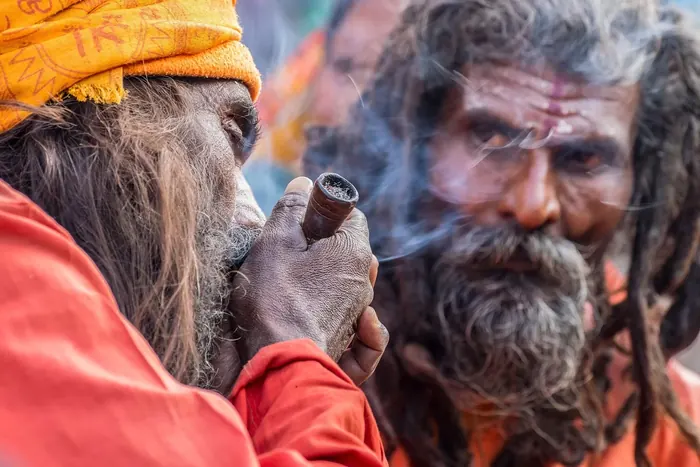
States & union territories
Cities
Supporters
Just now
इतिहास · Why it's banned
India's oldest plant, banned by a 1985 law
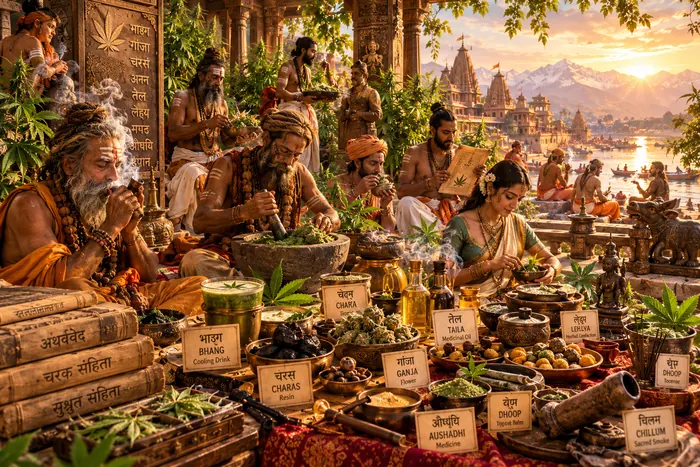
Cannabis was part of Indian life for three thousand years before the NDPS Act made it a crime. The ban came from outside pressure, not from Indian evidence of harm.
Until 1985, ganja and charas were legal in India and sold openly, often through licensed shops. Then a new law, the NDPS Act, made them crimes almost overnight. Bhang, made from the leaves, stayed legal. So today the same plant is legal or illegal depending on which part of it you hold.
The British studied cannabis in India for a whole year in the 1890s and decided a ban would do more harm than good. Independent India banned it anyway, under pressure from the United States and a UN treaty. Now even the UN has softened its view, and courts in India are asking the government to think again.
Three thousand years in one timeline
- c. 1500–1000 BCE
The Atharvaveda names bhanga among five sacred plants that free people from distress.
- Classical and medieval India
Ayurveda calls the plant Vijaya, "the victorious one". Texts such as the 16th-century Bhavaprakasha list its names, its uses and its dangers, and describe how to purify it before use.
- 1785
French botanist Jean-Baptiste Lamarck names Cannabis indica after the plants he studied from India.
- 1893–94
The British government sets up the Indian Hemp Drugs Commission. It hears almost 1,200 witnesses across India, from doctors and officials to yogis and fakirs, and publishes more than 3,000 pages. Its finding: moderate use "produces no injurious effects on the mind" and "no moral injury whatever". It advises control and taxation, not prohibition.
- 1961
The UN Single Convention puts cannabis in the strictest class, alongside heroin. India objects and wins 25 years to phase out traditional use.
- 1985
As that window closes and US pressure grows, the Rajiv Gandhi government introduces the NDPS Bill on 23 August 1985. It becomes law on 14 November 1985. Ganja and charas become crimes. Bhang stays legal.
- 1986
The Narcotics Control Bureau is set up to enforce the new law.
- 1989, 2001, 2014
The Act is amended three times. The 2014 change raises the maximum sentence for a small quantity from six months to one year.
- 2018
Uttarakhand opens India's first licensed industrial hemp programme.
- 2019
The Great Legalisation Movement India Trust challenges the cannabis provisions of the NDPS Act in the Delhi High Court.
- 2020
The UN Commission on Narcotic Drugs removes cannabis from its most restrictive schedule. India votes in favour.
- 2021
FSSAI allows hemp seed, hemp seed oil and hemp seed flour as food. The Ministry of Social Justice recommends sending drug users to rehabilitation as victims, not to jail.
- 2024–25
Himachal Pradesh amends its NDPS rules and approves a pilot for medicinal and industrial cultivation, joining Uttarakhand, Uttar Pradesh, Madhya Pradesh, Jammu & Kashmir and Manipur.
- 23 January 2026
The Delhi High Court directs the Union government to hold a stakeholder consultation and decide within six months whether the cannabis rules need to be relaxed. It names the Director of the Narcotics Control Bureau as the nodal officer.
- April 2026
The United States moves FDA-approved and state-licensed medical marijuana products into Schedule III, a far less restrictive category.
- June 2026
The Centre announces amendments to the NDPS Act aimed at narco syndicates. The Vijaya Satyagraha asks that the same amendment stop jailing ordinary users.
What the law says today
| Part of the plant | Status under the NDPS Act |
|---|---|
| Leaves (bhang) | Legal. Controlled by state excise rules; several states license bhang shops. |
| Seeds | Legal. Hemp seed foods allowed by FSSAI since 2021. |
| Flowering tops (ganja) | Banned. "Small quantity" is up to 1 kg; "commercial quantity" is 20 kg or more. |
| Resin (charas, hashish) | Banned. "Small quantity" is up to 100 g; "commercial quantity" is 1 kg or more. |
| Growing the plant | Banned, except where a state licenses it for industrial fibre, seed, medicine or research. |
| Offence | Maximum punishment |
|---|---|
| Consuming cannabis (Section 27) | 6 months in jail, a fine of ₹10,000, or both |
| Holding a small quantity | 1 year of rigorous imprisonment, a fine of ₹10,000, or both |
| More than small, less than commercial | 10 years and a fine of ₹1 lakh |
| Commercial quantity | 10 to 20 years and a fine of ₹1 to 2 lakh |
What they say, and what's true
It's a dangerous foreign drug.
It belongs to this land. Botanists named the indica type after India. Bhang is offered to Shiva on Mahashivratri and drunk as thandai at Holi.
International law forces India to ban it.
The UN itself downgraded cannabis in 2020, and India voted yes. Canada, Uruguay, Malta and Germany have legalised in some form.
Bhang is fine. Ganja is a crime.
Leaves and seeds are legal; flowers and resin are not. The same plant is lawful or criminal depending on which part you hold.
The ban stops supply.
Police seized about 5.4 lakh kg of cannabis in 2024 alone, by NCRB figures. In one ten-month drive Himachal destroyed illicit cannabis on more than 21,000 bighas. Forty years of prohibition have not stopped the plant.
Legalising will create a new drug problem.
About 3.1 crore Indians already use cannabis, by the latest official national survey. The plant is already here. Prohibition only decides who controls it: licensed sellers or dealers.
It's a gateway to harder drugs.
Most people who use cannabis never use harder drugs. A legal shop separates cannabis from street dealers who also push heroin and synthetic drugs.
It's purely harmful.
The 1894 Commission found moderate use practically harmless. Modern research finds specific medical uses and real risks for heavy and teenage use. Labels, testing and age limits manage those risks better than a black market.
Alcohol is different.
Alcohol is sold and taxed in most states. Some farmer leaders in Himachal blame the liquor lobby for the vilification of cannabis.
Who pays the price
Most NDPS cases are not about kingpins. In 2017 and 2018, India registered about 63,000 NDPS cases a year, and in both years there were more cases for possession for personal use than for trafficking. Young people and hill farmers carry criminal records for a plant that grows wild outside their homes.
A case can mean months in jail before trial, a lost job and a record that follows a person for life. The money and police hours spent on users are not spent on the syndicates selling heroin and synthetic drugs.
Data slot: latest NCRB personal-use versus trafficking split, and undertrial numbers, by state
Questions people ask
Is bhang really legal?
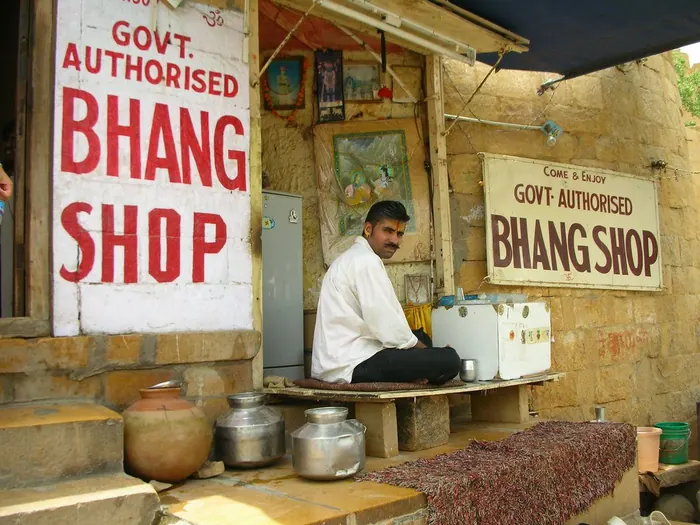
Yes. The NDPS Act excludes cannabis leaves and seeds from its ban when they are not mixed with the flowering tops. States control bhang through excise rules, and government-licensed bhang shops operate in cities such as Varanasi, Puri and Jaisalmer.
Can anyone grow hemp today?
No. A state government has to license it. Uttarakhand, Himachal Pradesh, Uttar Pradesh, Madhya Pradesh, Jammu & Kashmir and Manipur allow some controlled cultivation, usually for fibre, seed, medicine or research, with THC kept at or below 0.3%.
What is the Delhi High Court case?
The Great Legalisation Movement India Trust asked the court to strike down the cannabis provisions of the NDPS Act. On 23 January 2026 the court said the question is a policy decision, and directed the Union government to consult stakeholders, including doctors, and decide within six months whether the law needs to be relaxed.
Is this campaign asking for a free-for-all?
No. The Vijaya Satyagraha asks for legalisation with regulation: licences, testing, age limits, honest labels and tax, the way Canada and many US states do it. See the full list of requests on the Letter tab.
इतिहास · प्रतिबंध क्यों?
भारत का सबसे पुराना पौधा, 1985 के कानून से प्रतिबंधित
NDPS कानून के अपराध घोषित करने से पहले तीन हज़ार साल तक भांग भारतीय जीवन का हिस्सा थी। प्रतिबंध बाहरी दबाव से आया, भारत में नुकसान के किसी प्रमाण से नहीं।
1985 तक भारत में गांजा और चरस वैध थे और खुलेआम बिकते थे, अक्सर लाइसेंसशुदा दुकानों से। फिर एक नए कानून, NDPS अधिनियम, ने इन्हें लगभग रातों-रात अपराध बना दिया। पत्तियों से बनी भांग वैध रही। इसलिए आज एक ही पौधा, आपके हाथ में उसका कौन-सा हिस्सा है, इस पर वैध या अवैध हो जाता है।
1890 के दशक में अंग्रेज़ों ने पूरे एक साल भारत में भांग का अध्ययन किया और तय किया कि प्रतिबंध फ़ायदे से ज़्यादा नुकसान करेगा। फिर भी आज़ाद भारत ने अमेरिका के दबाव और संयुक्त राष्ट्र की एक संधि के चलते इसे प्रतिबंधित कर दिया। अब संयुक्त राष्ट्र ने भी अपना रुख़ नरम किया है, और भारत की अदालतें सरकार से दोबारा सोचने को कह रही हैं।
तीन हज़ार साल, एक समयरेखा में
- लगभग 1500–1000 ई.पू.
अथर्ववेद भांग को उन पाँच पवित्र पौधों में गिनता है जो कष्ट से मुक्त करते हैं।
- शास्त्रीय और मध्यकालीन भारत
आयुर्वेद इस पौधे को विजया, यानी "विजय दिलाने वाली", कहता है। 16वीं सदी के भावप्रकाश जैसे ग्रंथ इसके नाम, उपयोग और ख़तरे गिनाते हैं, और इस्तेमाल से पहले इसके शोधन की विधि बताते हैं।
- 1785
फ़्रांसीसी वनस्पतिशास्त्री ज़ाँ-बैप्टिस्ट लामार्क ने भारत से आए पौधों के आधार पर इसका नाम Cannabis indica रखा।
- 1893–94
ब्रिटिश सरकार ने इंडियन हेम्प ड्रग्स कमीशन बनाया। उसने पूरे भारत में लगभग 1,200 गवाहों को सुना, डॉक्टरों और अफ़सरों से लेकर योगियों और फ़कीरों तक, और 3,000 से अधिक पन्नों की रिपोर्ट दी। निष्कर्ष: संयमित सेवन से "मन पर कोई हानिकारक असर नहीं" और "कोई नैतिक हानि नहीं"। उसने प्रतिबंध के बजाय नियंत्रण और कर की सलाह दी।
- 1961
संयुक्त राष्ट्र की सिंगल कन्वेंशन ने भांग को हेरोइन के साथ सबसे सख़्त श्रेणी में रखा। भारत ने आपत्ति की और पारंपरिक उपयोग ख़त्म करने के लिए 25 साल का समय लिया।
- 1985
वह अवधि ख़त्म होने और अमेरिकी दबाव बढ़ने पर राजीव गांधी सरकार ने 23 अगस्त 1985 को NDPS विधेयक पेश किया। 14 नवंबर 1985 को यह कानून बन गया। गांजा और चरस अपराध बन गए। भांग वैध रही।
- 1986
नए कानून को लागू करने के लिए नारकोटिक्स कंट्रोल ब्यूरो बना।
- 1989, 2001, 2014
कानून में तीन बार संशोधन हुआ। 2014 के बदलाव ने थोड़ी मात्रा के लिए अधिकतम सज़ा छह महीने से बढ़ाकर एक साल कर दी।
- 2018
उत्तराखंड ने भारत का पहला लाइसेंसशुदा औद्योगिक हेम्प कार्यक्रम शुरू किया।
- 2019
ग्रेट लीगलाइज़ेशन मूवमेंट इंडिया ट्रस्ट ने दिल्ली उच्च न्यायालय में NDPS कानून के भांग से जुड़े प्रावधानों को चुनौती दी।
- 2020
संयुक्त राष्ट्र नारकोटिक ड्रग्स आयोग ने भांग को अपनी सबसे सख़्त सूची से हटाया। भारत ने इसके पक्ष में वोट दिया।
- 2021
FSSAI ने हेम्प के बीज, बीज का तेल और आटा खाद्य के रूप में मंज़ूर किया। सामाजिक न्याय मंत्रालय ने सिफ़ारिश की कि नशा करने वालों को अपराधी नहीं, पीड़ित मानकर जेल के बजाय पुनर्वास भेजा जाए।
- 2024–25
हिमाचल प्रदेश ने अपने NDPS नियम बदले और औषधीय व औद्योगिक खेती के पायलट को मंज़ूरी दी। उत्तराखंड, उत्तर प्रदेश, मध्य प्रदेश, जम्मू-कश्मीर और मणिपुर पहले से किसी न किसी रूप में नियंत्रित खेती की अनुमति देते हैं।
- 23 जनवरी 2026
दिल्ली उच्च न्यायालय ने केंद्र सरकार को हितधारकों से परामर्श कर छह महीने में यह तय करने का निर्देश दिया कि क्या भांग के नियमों में ढील की ज़रूरत है। नारकोटिक्स कंट्रोल ब्यूरो के निदेशक को इसका नोडल अधिकारी बनाया गया।
- अप्रैल 2026
अमेरिका ने FDA-स्वीकृत और राज्य-लाइसेंसशुदा चिकित्सीय मारिजुआना उत्पादों को शेड्यूल III में डाला, जो कहीं कम सख़्त श्रेणी है।
- जून 2026
केंद्र ने नशा गिरोहों पर लगाम के लिए NDPS कानून में संशोधन की घोषणा की। विजया सत्याग्रह माँग करता है कि वही संशोधन आम उपभोक्ताओं को जेल भेजना भी बंद करे।
आज कानून क्या कहता है
| पौधे का हिस्सा | NDPS कानून में स्थिति |
|---|---|
| पत्तियाँ (भांग) | वैध। राज्य के आबकारी नियमों से नियंत्रित; कई राज्य भांग की दुकानों को लाइसेंस देते हैं। |
| बीज | वैध। 2021 से FSSAI हेम्प बीज के खाद्य पदार्थों की अनुमति देता है। |
| फूल वाले सिरे (गांजा) | प्रतिबंधित। "थोड़ी मात्रा" 1 किलो तक; "वाणिज्यिक मात्रा" 20 किलो या अधिक। |
| राल (चरस, हशीश) | प्रतिबंधित। "थोड़ी मात्रा" 100 ग्राम तक; "वाणिज्यिक मात्रा" 1 किलो या अधिक। |
| पौधा उगाना | प्रतिबंधित, सिवाय वहाँ जहाँ राज्य औद्योगिक रेशे, बीज, औषधि या शोध के लिए लाइसेंस दे। |
| अपराध | अधिकतम सज़ा |
|---|---|
| भांग का सेवन (धारा 27) | 6 महीने जेल, ₹10,000 जुर्माना, या दोनों |
| थोड़ी मात्रा रखना | 1 साल सश्रम कारावास, ₹10,000 जुर्माना, या दोनों |
| थोड़ी से ज़्यादा, वाणिज्यिक से कम | 10 साल और ₹1 लाख जुर्माना |
| वाणिज्यिक मात्रा | 10 से 20 साल और ₹1 से 2 लाख जुर्माना |
वे क्या कहते हैं, और सच क्या है
यह एक ख़तरनाक विदेशी नशा है।
यह इसी धरती का पौधा है। वनस्पतिशास्त्रियों ने इसकी indica किस्म का नाम भारत पर रखा। महाशिवरात्रि पर शिव को भांग चढ़ती है और होली पर ठंडाई पी जाती है।
अंतरराष्ट्रीय कानून भारत को प्रतिबंध के लिए मजबूर करता है।
2020 में संयुक्त राष्ट्र ने ख़ुद भांग की श्रेणी नरम की, और भारत ने हाँ में वोट दिया। कनाडा, उरुग्वे, माल्टा और जर्मनी ने किसी न किसी रूप में इसे वैध किया है।
भांग ठीक है, गांजा अपराध है।
पत्तियाँ और बीज वैध हैं; फूल और राल नहीं। एक ही पौधा, आपके हाथ में कौन-सा हिस्सा है, इस पर वैध या अपराध बन जाता है।
प्रतिबंध से आपूर्ति रुकती है।
NCRB के आँकड़ों के अनुसार अकेले 2024 में पुलिस ने लगभग 5.4 लाख किलो भांग ज़ब्त की। हिमाचल ने दस महीने के एक अभियान में 21,000 से ज़्यादा बीघा में अवैध भांग नष्ट की। चालीस साल का प्रतिबंध पौधे को नहीं रोक पाया।
वैध करने से नशे की नई समस्या पैदा होगी।
नवीनतम सरकारी राष्ट्रीय सर्वे के अनुसार लगभग 3.1 करोड़ भारतीय पहले से भांग का सेवन करते हैं। पौधा पहले से यहाँ है। प्रतिबंध बस यह तय करता है कि नियंत्रण किसके हाथ में है: लाइसेंसशुदा विक्रेता या तस्कर।
यह कड़े नशों का दरवाज़ा है।
भांग का सेवन करने वाले ज़्यादातर लोग कभी कड़े नशे नहीं करते। वैध दुकान भांग को उन सड़क-विक्रेताओं से अलग करती है जो हेरोइन और सिंथेटिक नशा भी बेचते हैं।
यह पूरी तरह हानिकारक है।
1894 के आयोग ने संयमित सेवन को लगभग हानिरहित पाया। आधुनिक शोध कुछ ख़ास चिकित्सीय उपयोग और भारी व किशोर उपयोग के वास्तविक जोखिम, दोनों बताता है। लेबल, जाँच और उम्र की सीमा इन जोखिमों को काले बाज़ार से बेहतर संभालते हैं।
शराब की बात अलग है।
ज़्यादातर राज्यों में शराब बिकती है और उस पर कर लगता है। हिमाचल के कुछ किसान नेता भांग की बदनामी के पीछे शराब लॉबी को मानते हैं।
क़ीमत कौन चुकाता है
ज़्यादातर NDPS मामले बड़े तस्करों के नहीं होते। 2017 और 2018 में भारत में हर साल लगभग 63,000 NDPS मामले दर्ज हुए, और दोनों सालों में तस्करी से ज़्यादा मामले निजी उपयोग के लिए रखने के थे। युवा और पहाड़ी किसान उस पौधे के लिए आपराधिक रिकॉर्ड ढोते हैं जो उनके घर के बाहर जंगली उगता है।
एक मुक़दमे का मतलब हो सकता है सुनवाई से पहले महीनों जेल, नौकरी का जाना और ज़िंदगी भर पीछा करने वाला रिकॉर्ड। उपभोक्ताओं पर ख़र्च होने वाला पैसा और पुलिस का समय हेरोइन और सिंथेटिक नशा बेचने वाले गिरोहों पर ख़र्च नहीं होता।
डेटा जोड़ें: NCRB के ताज़ा आँकड़े, निजी उपयोग बनाम तस्करी, और विचाराधीन क़ैदी, राज्य-वार
लोग जो पूछते हैं
क्या भांग सच में वैध है?
हाँ। NDPS कानून भांग की पत्तियों और बीजों को, जब वे फूल वाले सिरों के साथ न मिले हों, प्रतिबंध से बाहर रखता है। राज्य आबकारी नियमों से भांग को नियंत्रित करते हैं, और वाराणसी, पुरी और जैसलमेर जैसे शहरों में सरकार द्वारा लाइसेंसशुदा भांग की दुकानें चलती हैं।
क्या आज कोई भी हेम्प उगा सकता है?
नहीं। इसके लिए राज्य सरकार का लाइसेंस चाहिए। उत्तराखंड, हिमाचल प्रदेश, उत्तर प्रदेश, मध्य प्रदेश, जम्मू-कश्मीर और मणिपुर कुछ नियंत्रित खेती की अनुमति देते हैं, आमतौर पर रेशे, बीज, औषधि या शोध के लिए, और THC 0.3% या उससे कम रखना होता है।
दिल्ली उच्च न्यायालय का मामला क्या है?
ग्रेट लीगलाइज़ेशन मूवमेंट इंडिया ट्रस्ट ने अदालत से NDPS कानून के भांग वाले प्रावधान रद्द करने को कहा। 23 जनवरी 2026 को अदालत ने कहा कि यह नीति का सवाल है, और केंद्र सरकार को डॉक्टरों समेत हितधारकों से परामर्श कर छह महीने में यह तय करने का निर्देश दिया कि क्या कानून में ढील की ज़रूरत है।
क्या यह अभियान बेलगाम छूट माँग रहा है?
नहीं। विजया सत्याग्रह नियंत्रण के साथ वैधीकरण माँगता है: लाइसेंस, जाँच, उम्र की सीमा, सच्चे लेबल और कर, जैसे कनाडा और अमेरिका के कई राज्य करते हैं। पूरी माँगें पत्र वाले टैब पर देखिए।
- Delhi High Court: W.P.(C) 7608/2019, order of 23 January 2026
- Indian Hemp Drugs Commission, 1893–94
- NDPS Act, 1985: history, quantities and penalties
- Deccan Herald: Social Justice Ministry on avoiding jail for users (2021)
- PIB, citing NCRB Crime in India: cannabis seizures 2023–24
- Factly: NDPS cases 2017–18, personal use versus trafficking
- Telangana Today: Centre to amend NDPS Act (June 2026)
- Ohio State: US final order on marijuana scheduling (April 2026)
- Down To Earth: Himachal pilot project
- The Tribune: Himachal's destruction drives
- Ministry of Social Justice / AIIMS: Magnitude of Substance Use in India

पर्यावरण · Environment
A wild weed today. A climate crop tomorrow.
Hemp grows fast, drinks less than cotton, pulls carbon out of the air and gives fibre, building material, food and fuel from one stalk. Legal cultivation would put all of it to work.
Hemp is the non-intoxicating cousin of ganja, grown for its stalk and seed. In three to four months it grows taller than a person. Its outer skin gives strong fibre for cloth and rope. Its woody core can be mixed with lime to make walls. Its seeds are food. While it grows, it soaks up carbon dioxide and shades out weeds.
India's sun means cannabis and hemp can be grown outdoors, without the electricity that indoor farms in Canada burn. That makes Indian-grown cannabis potentially some of the lowest-carbon in the world.
Why hemp is good for the land
From seed to harvest for a typical fibre crop, so it fits between other seasons.
Taken up per hectare while the crop grows, by the European Industrial Hemp Association's estimate: about 1.37–1.6 t of CO₂ in every tonne harvested. It stays locked away only in long-lived products such as hempcrete, so each product needs its own life-cycle check.
Under suitable conditions: roughly 2,400–3,400 litres per kilo of fibre against 9,758 for cotton, by one estimate. Field studies put hemp's season at 220–700 mm of water, against 763–915 mm for cotton. The saving depends on the variety and the climate.
Dense fibre hemp grows fast and shades out weeds. Multi-year trials found it suppressed weeds about as well as sorghum–Sudan grass and let the next crop go in without ploughing. How quickly it covers the soil depends on seed rate, weather and soil.
Were recorded visiting hemp in one field study. Its late-summer pollen helps when little else is in bloom, though it gives almost no nectar, so it works best beside other crops.
A two-year field study found roots 1.3 m deep one year and 2 m the next, with 2.41–3.21 t of root biomass a hectare. Roots add organic matter and channels, but cannot break hard rock or severe hardpan. Heavy-metal clean-up trials have mixed results.
Grown in the sun, not under lamps
Most legal cannabis in Canada grows indoors or in greenhouses, under lights, with heating, cooling and dehumidifiers running through a cold winter. That uses a great deal of energy.
A 2024 study found outdoor cannabis cultivation could produce about 50 times lower greenhouse-gas emissions than indoor cultivation. A 2025 US life-cycle assessment estimated that moving cultivation outdoors could cut the industry's emissions by up to 76%.
India has the sunlight, the growing seasons and, in the Himalayan foothills, a plant that already grows wild. Grown outdoors and processed carefully, Indian cannabis and hemp could supply low-carbon medicine and fibre to the world.
These figures come from different studies with different assumptions. A fair India-versus-Canada comparison should measure kg of CO₂ per kg of finished product, from farm to shelf.
Hempcrete: walls that store carbon
Hempcrete is the woody core of the stalk (called hurd or shiv) mixed with lime and water. It is not a replacement for concrete pillars or beams: it fills the walls of a building that has an RCC, steel, timber or bamboo frame. What it does very well is insulate, absorb sound, balance indoor humidity and lock away carbon.
Hurd, lime binder and water in one cubic metre of a common wall mix. It dries to 300–500 kg per cubic metre, a fraction of the weight of concrete.
Per cubic metre for favourable mixes, from farm to factory gate. Ordinary Portland cement concrete is around +300 to +400.
Thermal conductivity: a 300 mm wall gives a material R-value of about 3.3. Cooler homes need less air conditioning.
India fires about 250 billion bricks a year in some 1.44 lakh kilns. Replacing even 1–5% of that brick masonry with hempcrete would need 50 lakh to 2.5 crore cubic metres a year.
| If hempcrete replaced | Hempcrete a year | Hemp land | Homes, roughly |
|---|---|---|---|
| 1% of brick masonry | 50 lakh m³ | 69,000 ha | 1 lakh a year |
| 5% | 2.5 crore m³ | 3.46 lakh ha | 5 lakh a year |
| 10% | 5 crore m³ | 6.9 lakh ha | 10 lakh a year |
Assumes 90 kg of hurd per m³, about 6.5 tonnes of usable hurd per hectare and 50 m³ per 100 m² home. 5% would use under a third of a percent of India's net sown area. Lime is the real bottleneck: 10% adoption would need about 59% of India's current lime output.
India has already built with it. An 800 sq ft hemp homestay in Pauri, Uttarakhand was completed for about ₹30 lakh (with solar and rainwater harvesting included), and a 40,000 sq ft hempcrete care facility has been announced in Meerut.
Hemp cloth for India's mills
India has one of the world's biggest spinning and garment industries, but almost no domestic hemp fibre. The practical first step is not 100% hemp cloth but blends: 10–30% "cottonised" hemp mixed with cotton, lyocell or viscose, which ordinary mills can spin.
India's hemp textile market today, by a 2025 USDA estimate. Small, but growing on export demand.
Processed hemp fibre India imported in January–November 2024, worth about ₹20 crore. Mills import because domestic fibre is scarce and uneven.
Extracted bast fibre per hectare under a developed system. The rest of the stalk, the hurd, can go to hempcrete, boards or bedding.
The hemp share in the shirts, T-shirts and denim most likely to sell first. In 2026 an Indian chain began spinning 20–100% hemp yarns from imported fibre.
An energy crop
Every part of the plant has a fuel use. Dry stalks yield roughly 5–22 tonnes per hectare. Stalks and hurds can become pellets and briquettes for boilers in place of coal, feedstock for biogas, or cellulose for second-generation ethanol. What is left can be turned into biochar and returned to the soil.
Add process data: calorific value of hurd, ethanol per tonne, biogas yield
What hemp can replace
| Today | Hemp alternative |
|---|---|
| Coal and furnace oil in boilers | Hemp pellets, briquettes and biochar |
| Imported crude in transport fuel | 2G ethanol and biogas from hemp biomass |
| Cotton and polyester | Hemp fibre and blends |
| Single-use plastic | Hemp bio-composites and packaging |
| Fired bricks and cement blocks | Hempcrete infill, blocks and panels |
| Synthetic insulation | Hemp fibre insulation and acoustic panels |
| Imported protein and oils | Hemp seed, oil and flour (FSSAI-approved since 2021) |
Done right, not just done
Hemp is not automatically green. Soaking stalks in ponds (water retting) can pollute water. Heavy chemical processing of fibre uses energy and chemicals. Lime production releases about a tonne of CO₂ for every tonne of lime. The climate case holds when hemp is retted in the field, processed near the farm, and measured with a proper life-cycle assessment.
पर्यावरण · Environment
आज जंगली खरपतवार। कल जलवायु की फ़सल।
हेम्प तेज़ी से उगता है, कपास से कम पानी पीता है, हवा से कार्बन खींचता है, और एक ही तने से रेशा, निर्माण सामग्री, भोजन और ईंधन देता है। वैध खेती इस सबको काम में ला सकती है।
हेम्प गांजे का बिना नशे वाला भाई है, जिसे तने और बीज के लिए उगाया जाता है। तीन-चार महीने में यह आदमी से ऊँचा हो जाता है। इसकी बाहरी छाल से कपड़े और रस्सी के लिए मज़बूत रेशा मिलता है। इसके लकड़ी जैसे भीतरी हिस्से को चूने में मिलाकर दीवारें बनती हैं। इसके बीज भोजन हैं। उगते समय यह कार्बन डाइऑक्साइड सोखता है और खरपतवार को दबा देता है।
भारत की धूप में भांग और हेम्प खुले खेत में उग सकते हैं, उस बिजली के बिना जो कनाडा के बंद फ़ार्म जलाते हैं। इससे भारत में उगी भांग दुनिया की सबसे कम कार्बन वाली भांग में से हो सकती है।
हेम्प ज़मीन के लिए अच्छा क्यों है
रेशे की आम फ़सल में बीज से कटाई तक, इसलिए यह दूसरे मौसमों के बीच फ़िट हो जाती है।
फ़सल बढ़ते समय प्रति हेक्टेयर सोखती है, यूरोपियन इंडस्ट्रियल हेम्प एसोसिएशन के अनुमान से: हर कटे टन में लगभग 1.37–1.6 टन CO₂। यह स्थायी रूप से तभी बंद रहता है जब हेम्पक्रीट जैसे लंबे चलने वाले उत्पादों में जाए, इसलिए हर उत्पाद का अपना जीवन-चक्र आकलन चाहिए।
सही हालात में: एक अनुमान से प्रति किलो रेशे पर हेम्प के लिए लगभग 2,400–3,400 लीटर, कपास के लिए 9,758। खेत के अध्ययनों में हेम्प के मौसम में 220–700 मिमी पानी लगता है, कपास में 763–915 मिमी। बचत किस्म और जलवायु पर निर्भर है।
घना रेशे वाला हेम्प तेज़ी से बढ़ता है और खरपतवार को छाँव से दबा देता है। कई साल के प्रयोगों में इसने ज्वार–सूडान घास जितना खरपतवार दबाया और अगली फ़सल बिना जुताई के बोई जा सकी। मिट्टी कितनी जल्दी ढकती है, यह बीज की मात्रा, मौसम और मिट्टी पर निर्भर है।
एक खेत-अध्ययन में हेम्प पर आती दर्ज हुईं। देर गर्मी का इसका पराग तब काम आता है जब और कुछ कम खिलता है, पर इसमें लगभग मकरंद नहीं होता, इसलिए यह दूसरी फ़सलों के साथ सबसे अच्छा है।
दो साल के एक खेत-अध्ययन में जड़ें एक साल 1.3 मीटर और अगले साल 2 मीटर गहरी मिलीं, प्रति हेक्टेयर 2.41–3.21 टन जड़-बायोमास के साथ। जड़ें जैविक पदार्थ और रास्ते जोड़ती हैं, पर कठोर चट्टान या बहुत सख़्त परत नहीं तोड़ सकतीं। भारी धातुएँ हटाने के प्रयोगों के नतीजे मिले-जुले हैं।
धूप में उगी, लैंप के नीचे नहीं
कनाडा की ज़्यादातर वैध भांग बंद कमरों या ग्रीनहाउस में, लाइटों के नीचे, ठंडी सर्दी में हीटर, कूलर और डीह्यूमिडिफ़ायर चलाकर उगती है। इसमें बहुत ऊर्जा लगती है।
2024 के एक अध्ययन में पाया गया कि खुले खेत में भांग की खेती से बंद खेती के मुक़ाबले लगभग 50 गुना कम ग्रीनहाउस गैस निकल सकती है। 2025 के एक अमेरिकी जीवन-चक्र आकलन के अनुसार खेती को खुले में ले जाने से उद्योग का उत्सर्जन 76% तक घट सकता है।
भारत के पास धूप है, उगाने के मौसम हैं, और हिमालय की तलहटी में पहले से जंगली उगता पौधा है। खुले में उगाकर और सावधानी से प्रोसेस करके भारतीय भांग और हेम्प दुनिया को कम कार्बन वाली औषधि और रेशा दे सकते हैं।
ये आँकड़े अलग-अलग मान्यताओं वाले अलग अध्ययनों से हैं। भारत और कनाडा की सही तुलना में खेत से दुकान तक, तैयार उत्पाद के हर किलो पर कितने किलो CO₂, यह मापना होगा।
हेम्पक्रीट: दीवारें जो कार्बन जमा करती हैं
हेम्पक्रीट तने के लकड़ी जैसे भीतरी हिस्से (हर्ड या शिव) को चूने और पानी में मिलाकर बनता है। यह कंक्रीट के खंभों या बीम की जगह नहीं लेता: यह RCC, स्टील, लकड़ी या बाँस के ढाँचे वाली इमारत की दीवारें भरता है। यह बहुत अच्छी तरह गर्मी रोकता है, आवाज़ सोखता है, घर की नमी संतुलित रखता है और कार्बन बंद रखता है।
दीवार के एक आम मिश्रण के एक घन मीटर में हर्ड, चूना और पानी। सूखने पर यह 300–500 किलो प्रति घन मीटर रह जाता है, कंक्रीट के वज़न का छोटा हिस्सा।
अच्छे मिश्रणों में प्रति घन मीटर, खेत से फ़ैक्ट्री गेट तक। साधारण पोर्टलैंड सीमेंट कंक्रीट लगभग +300 से +400 होता है।
ऊष्मा चालकता: 300 मिमी की दीवार से लगभग 3.3 का R-मान मिलता है। ठंडे घरों में कम AC चाहिए।
भारत लगभग 1.44 लाख भट्ठों में हर साल लगभग 25,000 करोड़ ईंटें पकाता है। उस ईंट-चिनाई का सिर्फ़ 1–5% हेम्पक्रीट से बदलने के लिए हर साल 50 लाख से 2.5 करोड़ घन मीटर चाहिए।
| अगर हेम्पक्रीट बदले | सालाना हेम्पक्रीट | हेम्प की ज़मीन | लगभग घर |
|---|---|---|---|
| ईंट-चिनाई का 1% | 50 लाख घन मी. | 69,000 हेक्टेयर | 1 लाख प्रति वर्ष |
| 5% | 2.5 करोड़ घन मी. | 3.46 लाख हेक्टेयर | 5 लाख प्रति वर्ष |
| 10% | 5 करोड़ घन मी. | 6.9 लाख हेक्टेयर | 10 लाख प्रति वर्ष |
मान्यता: प्रति घन मीटर 90 किलो हर्ड, प्रति हेक्टेयर लगभग 6.5 टन काम का हर्ड, और 100 वर्ग मीटर के घर में 50 घन मीटर। 5% में भारत के शुद्ध बोए गए क्षेत्र का एक-तिहाई प्रतिशत से भी कम लगेगा। असली अड़चन चूना है: 10% के लिए भारत के मौजूदा चूना उत्पादन का लगभग 59% चाहिए।
भारत में इससे निर्माण हो चुका है। उत्तराखंड के पौड़ी में 800 वर्ग फ़ुट का हेम्प होमस्टे लगभग ₹30 लाख में बना (सोलर और वर्षा-जल संचयन समेत), और मेरठ में 40,000 वर्ग फ़ुट की हेम्पक्रीट देखभाल सुविधा की घोषणा हुई है।
भारत की मिलों के लिए हेम्प का कपड़ा
भारत के पास दुनिया के सबसे बड़े कताई और परिधान उद्योगों में से एक है, पर देश का अपना हेम्प रेशा लगभग नहीं है। पहला व्यावहारिक कदम 100% हेम्प कपड़ा नहीं, बल्कि मिश्रण है: 10–30% "कॉटनाइज़्ड" हेम्प, कपास, लायोसेल या विस्कोस के साथ, जिसे आम मिलें कात सकती हैं।
2025 के USDA अनुमान से आज भारत का हेम्प वस्त्र बाज़ार। छोटा, पर निर्यात की माँग पर बढ़ता हुआ।
जनवरी–नवंबर 2024 में भारत ने इतना प्रोसेस्ड हेम्प रेशा आयात किया, लगभग ₹20 करोड़ का। मिलें आयात करती हैं क्योंकि देसी रेशा कम और असमान है।
विकसित व्यवस्था में प्रति हेक्टेयर निकला रेशा। तने का बाक़ी हिस्सा, हर्ड, हेम्पक्रीट, बोर्ड या पशु-बिछावन में जा सकता है।
शर्ट, टी-शर्ट और डेनिम में हेम्प का वह हिस्सा जो सबसे पहले बिकेगा। 2026 में एक भारतीय शृंखला ने आयातित रेशे से 20–100% हेम्प धागा कातना शुरू किया।
एक ऊर्जा फ़सल
पौधे के हर हिस्से का ईंधन में उपयोग है। सूखे तने प्रति हेक्टेयर लगभग 5–22 टन मिलते हैं। तनों और हर्ड से बॉयलरों के लिए पेलेट और ब्रिकेट बन सकते हैं जो कोयले की जगह लें, बायोगैस का कच्चा माल, या दूसरी पीढ़ी के एथेनॉल के लिए सेल्यूलोज़। बचा हिस्सा बायोचार बनकर फिर मिट्टी में लौट सकता है।
प्रोसेस डेटा जोड़ें: हर्ड का ऊष्मीय मान, प्रति टन एथेनॉल, बायोगैस उत्पादन
हेम्प किसकी जगह ले सकता है
| आज | हेम्प विकल्प |
|---|---|
| बॉयलरों में कोयला और फ़र्नेस ऑयल | हेम्प पेलेट, ब्रिकेट और बायोचार |
| परिवहन ईंधन में आयातित कच्चा तेल | हेम्प बायोमास से 2G एथेनॉल और बायोगैस |
| कपास और पॉलिएस्टर | हेम्प रेशा और मिश्रण |
| एकल-उपयोग प्लास्टिक | हेम्प बायो-कंपोज़िट और पैकेजिंग |
| पकी ईंटें और सीमेंट ब्लॉक | हेम्पक्रीट भराई, ब्लॉक और पैनल |
| सिंथेटिक इंसुलेशन | हेम्प रेशे का इंसुलेशन और ध्वनि पैनल |
| आयातित प्रोटीन और तेल | हेम्प बीज, तेल और आटा (2021 से FSSAI मंज़ूर) |
सही तरीक़े से, सिर्फ़ किसी तरह नहीं
हेम्प अपने-आप हरा नहीं होता। तनों को तालाब में सड़ाने (वॉटर रेटिंग) से पानी प्रदूषित हो सकता है। रेशे की भारी रासायनिक प्रोसेसिंग में ऊर्जा और रसायन लगते हैं। चूना बनाने में हर टन चूने पर लगभग एक टन CO₂ निकलती है। जलवायु का फ़ायदा तब पक्का है जब हेम्प खेत में ही सड़ाया जाए, खेत के पास प्रोसेस हो, और सही जीवन-चक्र आकलन से मापा जाए।
- European Industrial Hemp Association: environmental benefits
- An assessment of the water use of hemp: a scoping review
- Hemp fibre properties and processing for textiles: a review
- USDA GAIN (2025): Sustainability driving demand for hemp fibre in India
- Textile World (2026): India's first integrated hemp fibre-to-yarn chain
- MDPI Buildings (2025): hempcrete performance and carbon review
- World Bank: India's brick kiln sector
- USGS Mineral Commodity Summaries 2025: lime
- Times of India: hemp house in Pauri, Uttarakhand
- Hemp Gazette: hempcrete care home project, Meerut

व्यापार · Business
Canada legalised cannabis on 17 October 2018
Since then, legal shops in Canada have sold about ₹1.94 lakh crore of cannabis. US state markets have sold about ₹16.7 lakh crore since 2014. India grows the plant wild and earns nothing from it.
When a country legalises cannabis, money that went to smugglers starts going to farmers, shop owners, workers and the government. Canada, a country of four crore people, now sells about ₹38,000 crore of legal cannabis a year. The United States sells about ₹3 lakh crore a year. All figures on this page are in rupees, converted at October 2026 rates (US$1 = ₹96.33, C$1 = ₹67.61), with the original currency underneath.
Canada
Legal medical and recreational sales from October 2018 to the end of 2024. About 87% of it recreational.
Legal store sales in 2025, up 4.1% on 2024. That is about ₹104 crore every day.
Tax and government revenue linked to the cannabis sector from 2018 to 2024.
Added to Canada's GDP by the sector over the same six years, with ₹2.84 lakh crore (C$42 billion) invested in farms, factories and shops.
Licensed cannabis retailers with staff at the end of 2025. Just over half are small shops with one to four employees.
Dried cannabis produced in 2024, tracked by Health Canada. Canada exported about 240 tonnes of medical cannabis in 2025.
United States
State-regulated medical and adult-use sales from 2014 to 2024.
Legal sales in 2025, central estimate (range US$30–34 billion). Flower is the biggest seller at 37.5%, then vapes at 24.4%.
Adult-use cannabis tax collected by US states through 2025, including ₹44,000 crore (US$4.57 billion) in 2025 alone.
Full-time jobs in the US state-legal cannabis industry.
States with legal adult use at the end of 2025. Medical use is legal in 43 states and DC.
FDA-approved and state-licensed medical marijuana products moved to Schedule III. A hearing on wider rescheduling began in June 2026.
व्यापार · Business
कनाडा ने 17 अक्टूबर 2018 को भांग को वैध किया
तब से कनाडा की वैध दुकानें लगभग ₹1.94 लाख करोड़ की भांग बेच चुकी हैं। अमेरिका के राज्य-बाज़ारों ने 2014 से लगभग ₹16.7 लाख करोड़ की बिक्री की है। भारत में यह पौधा जंगली उगता है और देश को इससे कुछ नहीं मिलता।
जब कोई देश भांग को वैध करता है, तो जो पैसा तस्करों के पास जाता था, वह किसानों, दुकानदारों, कामगारों और सरकार के पास जाने लगता है। चार करोड़ की आबादी वाला कनाडा अब हर साल लगभग ₹38,000 करोड़ की वैध भांग बेचता है। अमेरिका हर साल लगभग ₹3 लाख करोड़ की। इस पेज के सभी आँकड़े रुपये में हैं, अक्टूबर 2026 की दरों पर (US$1 = ₹96.33, C$1 = ₹67.61), नीचे मूल मुद्रा के साथ।
कनाडा
अक्टूबर 2018 से 2024 के अंत तक वैध चिकित्सीय और मनोरंजक बिक्री। इसमें लगभग 87% मनोरंजक।
2025 में वैध स्टोरों की बिक्री, 2024 से 4.1% अधिक। यानी हर दिन लगभग ₹104 करोड़।
2018 से 2024 तक भांग क्षेत्र से जुड़ा कर और सरकारी राजस्व।
इन्हीं छह सालों में इस क्षेत्र ने कनाडा के GDP में जोड़ा, और खेतों, फ़ैक्ट्रियों व दुकानों में ₹2.84 लाख करोड़ (C$42 अरब) का निवेश हुआ।
2025 के अंत में कर्मचारियों वाले लाइसेंसशुदा भांग विक्रेता। आधे से कुछ ज़्यादा एक से चार कर्मचारियों वाली छोटी दुकानें हैं।
2024 में हेल्थ कनाडा द्वारा दर्ज सूखी भांग का उत्पादन। 2025 में कनाडा ने लगभग 240 टन चिकित्सीय भांग निर्यात की।
अमेरिका
2014 से 2024 तक राज्य-नियंत्रित चिकित्सीय और वयस्क-उपयोग बिक्री।
2025 में वैध बिक्री, मध्य अनुमान (दायरा US$30–34 अरब)। सबसे ज़्यादा फूल (37.5%) बिकता है, फिर वेप (24.4%)।
2025 तक अमेरिकी राज्यों ने वयस्क-उपयोग भांग पर इतना कर वसूला, जिसमें अकेले 2025 में ₹44,000 करोड़ (US$4.57 अरब)।
अमेरिका के राज्य-वैध भांग उद्योग में पूर्णकालिक नौकरियाँ।
2025 के अंत में वयस्क-उपयोग वैध करने वाले राज्य। चिकित्सीय उपयोग 43 राज्यों और DC में वैध है।
FDA-स्वीकृत और राज्य-लाइसेंसशुदा चिकित्सीय मारिजुआना उत्पाद शेड्यूल III में गए। व्यापक पुनर्वर्गीकरण पर सुनवाई जून 2026 में शुरू हुई।
Canada: legal store sales by year, in ₹ crore
Show as table
United States: regulated sales by year, in ₹ lakh crore
Show as table
The world is moving
- 2013Uruguay becomes the first country to legalise and regulate cannabis nationally, through pharmacies, clubs and home growing.
- 2018Canada legalises adult use nationwide. South Africa's Constitutional Court protects private use; a 2024 Act follows.
- 2021Malta allows home growing and non-profit cannabis clubs.
- 2022Thailand decriminalises cannabis. In 2025 it tightens sales back to prescription.
- 2023Luxembourg allows up to four plants per household.
- 2024Germany legalises possession of 25 g in public, three plants at home and cannabis social clubs.
- 2026The US moves licensed medical cannabis products to Schedule III. Australia, Israel and much of Europe run prescription programmes.
The world already grows it
Estimated market-ready cannabis produced worldwide each year (range 25,000–60,000 t), almost all of it outside the law.
People who used cannabis in 2024, by UNODC estimate. Up about 40% in ten years.
Estimated yearly production in South Asia, including India, Nepal, Pakistan, Bangladesh and Sri Lanka.
Global industrial hemp market in 2025. Textiles make up about 27%, roughly ₹19,500 crore.
India's opportunity, in rupees
A likely first-year legal market a year, if India's existing users move to licensed shops.
A mature Indian market a year, adjusted for Indian prices and incomes. Central case: ₹2.5 lakh crore.
Hempcrete sales a year if it replaced 1–5% of India's brick walls.
India's hemp textile market today, waiting for domestic fibre.
Indian businesses already working at the edges
Bombay Hemp Company, Awshad, Wholeleaf and HempStreet sell within the legal leaf-and-hemp framework, some through Ayush-licensed cannabis Ayurveda products. In 2026 Panda Biotech and Culturewell Hemp set up India's first integrated hemp fibre-to-yarn chain, spinning imported fibre. Every one of them would grow faster with legal domestic supply.
The value chain legalisation would open
- Seed banks and breeding
- Licensed farming
- Decortication hubs
- Fibre mills
- Textiles and denim
- Ayurvedic medicine
- Modern pharma
- Food and nutraceuticals
- Hempcrete blocks and panels
- Bio-composites
- Bioenergy
- Testing labs
- Retail and tourism
- Exports
दुनिया आगे बढ़ रही है
- 2013उरुग्वे भांग को राष्ट्रीय स्तर पर वैध और नियंत्रित करने वाला पहला देश बना: फ़ार्मेसी, क्लब और घर पर उगाने के ज़रिए।
- 2018कनाडा ने पूरे देश में वयस्क उपयोग वैध किया। दक्षिण अफ़्रीका की संवैधानिक अदालत ने निजी उपयोग को संरक्षण दिया; 2024 में कानून आया।
- 2021माल्टा ने घर पर उगाने और गैर-लाभकारी भांग क्लबों की अनुमति दी।
- 2022थाईलैंड ने भांग को अपराध की श्रेणी से हटाया। 2025 में बिक्री फिर से डॉक्टर की पर्ची तक सीमित की।
- 2023लक्ज़मबर्ग ने हर घर में चार पौधों तक की अनुमति दी।
- 2024जर्मनी ने सार्वजनिक जगह पर 25 ग्राम, घर में तीन पौधे और भांग सोशल क्लब वैध किए।
- 2026अमेरिका ने लाइसेंसशुदा चिकित्सीय भांग उत्पादों को शेड्यूल III में डाला। ऑस्ट्रेलिया, इज़राइल और यूरोप का बड़ा हिस्सा डॉक्टरी पर्ची वाले कार्यक्रम चलाते हैं।
दुनिया पहले से इसे उगाती है
दुनिया भर में हर साल अनुमानित बाज़ार-योग्य भांग का उत्पादन (दायरा 25,000–60,000 टन), लगभग पूरा कानून के बाहर।
UNODC के अनुमान से 2024 में भांग का सेवन करने वाले लोग। दस साल में लगभग 40% ज़्यादा।
भारत, नेपाल, पाकिस्तान, बांग्लादेश और श्रीलंका समेत दक्षिण एशिया में अनुमानित सालाना उत्पादन।
2025 में वैश्विक औद्योगिक हेम्प बाज़ार। इसमें वस्त्र लगभग 27%, यानी लगभग ₹19,500 करोड़।
भारत का अवसर, रुपये में
अगर भारत के मौजूदा उपभोक्ता लाइसेंसशुदा दुकानों पर आ जाएँ, तो शुरुआती वैध बाज़ार हर साल।
भारतीय क़ीमतों और आमदनी के हिसाब से परिपक्व भारतीय बाज़ार, हर साल। मध्य अनुमान: ₹2.5 लाख करोड़।
अगर हेम्पक्रीट भारत की 1–5% ईंट की दीवारों की जगह ले, तो हर साल इसकी बिक्री।
आज भारत का हेम्प वस्त्र बाज़ार, जो देसी रेशे का इंतज़ार कर रहा है।
भारतीय कंपनियाँ जो किनारों पर पहले से काम कर रही हैं
बॉम्बे हेम्प कंपनी, अवशाद, होललीफ़ और हेम्पस्ट्रीट पत्ती-और-हेम्प के वैध ढाँचे में कारोबार करती हैं, कुछ आयुष-लाइसेंसशुदा भांग-आयुर्वेद उत्पादों के ज़रिए। 2026 में पांडा बायोटेक और कल्चरवेल हेम्प ने आयातित रेशे से भारत की पहली एकीकृत हेम्प रेशा-से-धागा शृंखला बनाई। वैध देसी आपूर्ति से इनमें से हर एक और तेज़ी से बढ़ेगी।
वैधीकरण से खुलने वाली मूल्य शृंखला
- बीज बैंक और प्रजनन
- लाइसेंसशुदा खेती
- रेशा निकालने के केंद्र
- रेशा मिलें
- वस्त्र और डेनिम
- आयुर्वेदिक औषधि
- आधुनिक फ़ार्मा
- खाद्य और न्यूट्रास्यूटिकल्स
- हेम्पक्रीट ब्लॉक और पैनल
- बायो-कंपोज़िट
- बायो-ऊर्जा
- जाँच प्रयोगशालाएँ
- खुदरा और पर्यटन
- निर्यात
- Deloitte: Six years of legalization in Canada
- Statistics Canada: Monthly retail trade sales by industry
- Statistics Canada: Canada's cannabis business since legalization
- Health Canada: dried cannabis production, inventory and sales
- BDSA via Cannabis Science and Technology: 2025 US sales
- Marijuana Policy Project: state tax revenue through 2025
- NORML: US cannabis jobs
- Ohio State: US final order on marijuana scheduling (April 2026)
- UNODC: World Drug Report 2026
- Grand View Research: industrial hemp market 2025
- Cannabis in Germany: the 2024 Cannabis Act
- The Week: India's cannabis startups
- NutraIngredients Asia: HempStreet's cannabis Ayurveda medicine
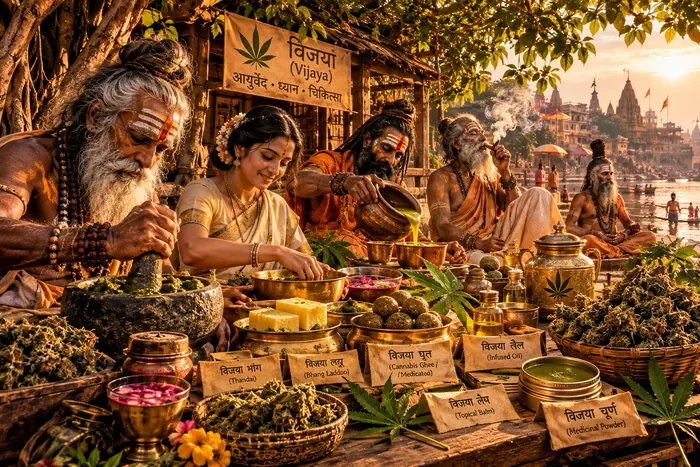
स्वास्थ्य · Health
Ayurveda calls it Vijaya
Vijaya means the victorious one. Ayurveda used the plant for centuries, carefully and in measured doses. Modern research confirms real but specific medical uses, and shows clearly where caution matters.
Cannabis is a medicine for some conditions, not a cure for everything. The best evidence is for a rare kind of childhood epilepsy, nausea from chemotherapy, appetite loss, and some long-lasting nerve pain. It is not proven to cure anxiety or depression, and heavy use, especially by young people, carries real risks.
Legalising does not mean telling people to use it. It means that people who do use it get a tested product with an honest label, from a shop that checks age, and can talk to their doctor without fear.
What Ayurveda says
The 16th-century Bhavaprakasha lists these six names for the plant and describes it as bitter, light and heating: a digestive that kindles agni, and also an intoxicant that raises pitta. Classical practice never used it raw. The leaves were first purified (shodhana), for example by boiling them in milk, and then given in small, measured amounts inside a formulation.
| Classical preparation | Traditionally given for |
|---|---|
| Jatiphaladi churna (powder) | Diarrhoea, indigestion, loss of appetite |
| Madana modaka (confection) | Cough and chronic bowel complaints |
| Kameshwara modaka (confection) | Nervous weakness and chronic bowel complaints |
| Jvalanala rasa (pill) | Indigestion with nausea and vomiting |
| Fried, powdered leaves | Sleeplessness and pain |
These are traditional uses recorded in the classical literature, not medical advice. Ayurvedic medicines containing bhang are made under licence and should only be taken through a qualified vaidya.
What modern evidence supports
Prescription purified CBD reduces seizures in Lennox–Gastaut syndrome, Dravet syndrome and tuberous sclerosis complex.
Prescription cannabinoids (dronabinol, nabilone) help with chemotherapy nausea and vomiting, usually when standard medicines aren't enough.
Dronabinol can restore appetite in people with AIDS-related wasting.
THC products give a small, short-term reduction in chronic nerve pain: about half a point on a 0–10 pain scale in a 2025 review, with more dizziness and sleepiness.
Some people with multiple sclerosis report less spasticity and pain.
Some people sleep better when pain eases, though sleep studies don't show better sleep quality in general.
Where the evidence is weak
Studies do not show that cannabis treats anxiety, depression, bipolar disorder or PTSD over the long term. CBD shows early promise for anxiety, but trials disagree. THC can trigger anxiety, paranoia or panic, especially at high doses. Frequent use is linked with worse outcomes for people with depression or bipolar disorder.
The real risks
Cannabis slows memory, attention, judgement and reaction time while it acts. Daily or near-daily use can lead to dependence. Frequent use of high-THC products raises the risk of psychosis, especially when started young or when there is a personal or family history of psychosis. It is a particular concern in pregnancy, while breastfeeding, and for people under 25.
Lower-risk use, if adults choose to use
- Start later. The later in life, the lower the risk to the developing brain.
- Choose lower THC, higher CBD. Potency matters more than almost anything else.
- Avoid synthetic cannabinoids. Street "spice" products are far more dangerous than the plant.
- Don't smoke if you can avoid it. Non-smoked forms spare the lungs; never mix with tobacco.
- Use less often. Occasional use carries much less risk than daily use.
- Never drive after using. Wait at least six hours, longer after edibles or a strong dose.
- Avoid it entirely if you are pregnant, or if you or a close relative have had psychosis.
Why legal is safer
On the street, nobody knows how strong a product is, what it was sprayed with, or whether it is cannabis at all. A licensed market tests for potency, pesticides and moulds, prints the THC and CBD on the label, refuses to sell to children, and lets patients speak honestly with a doctor.
Medical cannabis in India today
CSIR-IIIM Jammu runs India's first medicinal cannabis research project, focused on cancer and epilepsy. Ayush-licensed clinics and companies prescribe cannabis-leaf Ayurvedic medicines. The stakeholders the Delhi High Court asked the government to consult in 2026 include oncologists and palliative care doctors.
This page is information, not medical advice. Talk to a qualified doctor or vaidya before using any cannabis medicine.
स्वास्थ्य · Health
आयुर्वेद इसे विजया कहता है
विजया का अर्थ है विजय दिलाने वाली। आयुर्वेद ने सदियों तक इस पौधे का सावधानी से और नपी-तुली मात्रा में उपयोग किया। आधुनिक शोध कुछ ख़ास चिकित्सीय उपयोगों की पुष्टि करता है, और साफ़ बताता है कि कहाँ सावधानी ज़रूरी है।
भांग कुछ बीमारियों की दवा है, हर रोग का इलाज नहीं। सबसे पक्के प्रमाण बच्चों की एक दुर्लभ तरह की मिर्गी, कीमोथेरेपी से होने वाली मतली, भूख न लगने, और कुछ पुराने नस-दर्द के लिए हैं। यह चिंता या अवसाद ठीक करती है, यह साबित नहीं है, और भारी सेवन, ख़ासकर युवाओं में, असली जोखिम रखता है।
वैध करने का मतलब लोगों से इसका सेवन करने को कहना नहीं है। इसका मतलब है कि जो इसका सेवन करते हैं उन्हें जाँचा हुआ उत्पाद, सच्चे लेबल के साथ, उम्र जाँचने वाली दुकान से मिले, और वे बिना डर अपने डॉक्टर से बात कर सकें।
आयुर्वेद क्या कहता है
16वीं सदी का भावप्रकाश इस पौधे के ये छह नाम गिनाता है और इसे तिक्त, लघु और उष्ण बताता है: अग्नि बढ़ाने वाला पाचक, और साथ ही पित्त बढ़ाने वाला मादक। शास्त्रीय परंपरा में इसे कभी कच्चा नहीं दिया जाता था। पहले पत्तियों का शोधन होता था, जैसे दूध में उबालकर, फिर किसी योग के भीतर थोड़ी, नपी-तुली मात्रा में दिया जाता था।
| शास्त्रीय योग | पारंपरिक रूप से किसके लिए |
|---|---|
| जातिफलादि चूर्ण | दस्त, अपच, भूख न लगना |
| मदन मोदक | खाँसी और पुरानी आँतों की तकलीफ़ |
| कामेश्वर मोदक | स्नायु दुर्बलता और पुरानी आँतों की तकलीफ़ |
| ज्वालानल रस | मतली और उल्टी के साथ अपच |
| भुनी, पिसी पत्तियाँ | अनिद्रा और दर्द |
ये शास्त्रीय साहित्य में दर्ज पारंपरिक उपयोग हैं, चिकित्सीय सलाह नहीं। भांग वाली आयुर्वेदिक दवाएँ लाइसेंस के तहत बनती हैं और केवल योग्य वैद्य की सलाह से ही लेनी चाहिए।
आधुनिक प्रमाण किसका समर्थन करते हैं
डॉक्टर की पर्ची पर मिलने वाला शुद्ध CBD लेनॉक्स-गैस्टॉट सिंड्रोम, ड्रावेट सिंड्रोम और ट्यूबरस स्क्लेरोसिस कॉम्प्लेक्स में दौरे घटाता है।
डॉक्टरी कैनाबिनॉइड दवाएँ (ड्रोनाबिनॉल, नेबिलोन) कीमोथेरेपी की मतली और उल्टी में मदद करती हैं, आमतौर पर तब जब सामान्य दवाएँ काफ़ी न हों।
ड्रोनाबिनॉल AIDS से जुड़ी कमज़ोरी में भूख लौटा सकता है।
THC उत्पाद पुराने नस-दर्द में कम समय के लिए थोड़ी राहत देते हैं: 2025 की एक समीक्षा में 0–10 के पैमाने पर लगभग आधा अंक, साथ में ज़्यादा चक्कर और नींद।
मल्टिपल स्क्लेरोसिस के कुछ मरीज़ अकड़न और दर्द में कमी बताते हैं।
दर्द घटने पर कुछ लोग बेहतर सोते हैं, हालाँकि नींद के अध्ययन आम तौर पर नींद की गुणवत्ता में सुधार नहीं दिखाते।
जहाँ प्रमाण कमज़ोर हैं
अध्ययन यह नहीं दिखाते कि भांग लंबे समय में चिंता, अवसाद, बाइपोलर डिसऑर्डर या PTSD का इलाज करती है। CBD चिंता में शुरुआती उम्मीद दिखाता है, पर परीक्षणों के नतीजे अलग-अलग हैं। THC, ख़ासकर ज़्यादा मात्रा में, चिंता, वहम या घबराहट भड़का सकता है। अवसाद या बाइपोलर वाले लोगों में बार-बार सेवन ख़राब नतीजों से जुड़ा है।
असली जोखिम
असर के दौरान भांग याददाश्त, ध्यान, विवेक और प्रतिक्रिया की गति धीमी करती है। रोज़ या लगभग रोज़ सेवन से लत लग सकती है। ज़्यादा THC वाले उत्पादों का बार-बार सेवन साइकोसिस का जोखिम बढ़ाता है, ख़ासकर कम उम्र में शुरू करने पर या जब ख़ुद को या परिवार में साइकोसिस का इतिहास हो। गर्भावस्था, स्तनपान और 25 से कम उम्र में यह ख़ास चिंता की बात है।
अगर वयस्क सेवन चुनें, तो कम जोखिम के साथ
- देर से शुरू करें। उम्र जितनी ज़्यादा, विकसित होते दिमाग़ को जोखिम उतना कम।
- कम THC, ज़्यादा CBD चुनें। ताक़त लगभग हर चीज़ से ज़्यादा मायने रखती है।
- सिंथेटिक कैनाबिनॉइड से बचें। सड़क पर बिकने वाले "स्पाइस" उत्पाद पौधे से कहीं ज़्यादा ख़तरनाक हैं।
- हो सके तो धूम्रपान न करें। बिना धुएँ वाले रूप फेफड़ों को बचाते हैं; तंबाकू के साथ कभी न मिलाएँ।
- कम बार सेवन करें। कभी-कभार का सेवन रोज़ के सेवन से बहुत कम जोखिम वाला है।
- सेवन के बाद कभी गाड़ी न चलाएँ। कम से कम छह घंटे रुकें, खाने वाले रूप या तेज़ मात्रा के बाद और ज़्यादा।
- पूरी तरह बचें अगर आप गर्भवती हैं, या आपको या किसी क़रीबी रिश्तेदार को साइकोसिस हुआ हो।
वैध क्यों ज़्यादा सुरक्षित है
सड़क पर कोई नहीं जानता कि उत्पाद कितना तेज़ है, उस पर क्या छिड़का गया, या वह भांग है भी या नहीं। लाइसेंसशुदा बाज़ार ताक़त, कीटनाशक और फफूँद की जाँच करता है, लेबल पर THC और CBD छापता है, बच्चों को बेचने से मना करता है, और मरीज़ों को डॉक्टर से खुलकर बात करने देता है।
आज भारत में चिकित्सीय भांग
CSIR-IIIM जम्मू भारत की पहली औषधीय भांग शोध परियोजना चलाता है, जिसका ध्यान कैंसर और मिर्गी पर है। आयुष-लाइसेंसशुदा क्लिनिक और कंपनियाँ भांग की पत्ती वाली आयुर्वेदिक दवाएँ लिखती हैं। 2026 में दिल्ली उच्च न्यायालय ने सरकार से जिन हितधारकों से परामर्श को कहा, उनमें कैंसर विशेषज्ञ और पैलिएटिव केयर डॉक्टर शामिल हैं।
यह पेज जानकारी है, चिकित्सीय सलाह नहीं। किसी भी भांग दवा से पहले योग्य डॉक्टर या वैद्य से बात करें।
- US FDA: Cannabis research and drug approvals
- US CDC: About cannabis
- NIH NCCIH: Cannabis and cannabinoids
- Living systematic review on cannabis for chronic pain (2025)
- American Family Physician: Cannabis essentials for clinical practice
- Health Canada: Lower-risk cannabis use guidelines
- Health Canada: cannabis and the risk of psychosis
- Classical Ayurvedic preparations containing bhang
- NutraIngredients Asia: Ayush-licensed cannabis Ayurveda medicine
- Civilsdaily: cannabis research at CSIR-IIIM Jammu

अर्थव्यवस्था · Economy
Where there is enterprise, there is no poverty
So says Chanakya Niti. Here is what a legal, regulated market could mean for India's farmers, workers, treasury and courts, in rupees.
About 3.1 crore Indians already use cannabis, and all of that money goes to the illegal market today. A legal market would move it to licensed farmers and shops, and a share of every sale would go to the government as tax. If India's market grew to the size its population suggests, at Indian prices, it could be worth ₹1.5 to 3.5 lakh crore a year.
The Vijaya dividend: jobs and green taxes
Full-time jobs from farm to shop, plus seasonal work for lakhs more. Jute, a fibre like hemp, supports about 40 lakh farm families on under 8 lakh hectares.
To central and state governments from a ₹2.5 lakh crore market, at 20–30% of sales.
If 5 paise of every rupee is set aside for soil, water, farmers and treatment. India's ₹400-a-tonne clean-energy cess on coal stopped funding clean energy in 2017, and the levy that replaced it was scrapped in 2025.
Of biomass pellets from the hurd of 10 lakh hectares of hemp: about 6% of what coal power plants now need for co-firing, avoiding about 49 lakh tonnes of CO₂.
Run the numbers yourself
How we calculate
- Jobs in the regulated trade use the US ratio: 4,12,500 jobs on US$29 billion of sales in 2025, or one job for every ₹67.7 lakh of sales. Indian wages are lower, so the real number would likely be higher.
- Hemp farm work assumes 120 person-days per hectare, about half of what jute needs, and 250 working days to a full-time job.
- A hectare gives about 10 t of dry stalk with 6.5 t of hurd. Half the hurd becomes pellets and half becomes hempcrete. A tonne of pellets replaces about a tonne of Indian power-station coal, and every tonne of coal not burned avoids about 1.5 t of CO₂.
- Hempcrete homes follow the regional plant below: 1,385 hectares of hemp make walls for about 2,000 homes a year.
- The 5% co-firing rule needs about 5 crore tonnes of pellets a year.
- Textile, construction, export and tourism jobs are not counted, so the totals are cautious. The CO₂ a crop takes up is only locked away when it ends up in walls or replaces coal.
How big could it be?
| Stage | Users | Spend per user a year | Market a year |
|---|---|---|---|
| Medical and bhang only | 3–5 crore | ₹6,000–12,000 | ₹18,000–60,000 crore |
| Early regulated adult use | 7.5–12.5 crore | ₹8,000–14,000 | ₹60,000 crore–1.75 lakh crore |
| Mature, conservative | 15–20 crore | ₹10,000–15,000 | ₹1.5–3.0 lakh crore |
| Mature, at US use rates | 22–25 crore | ₹10,000–16,000 | ₹2.2–4.0 lakh crore |
| At Canadian use rates | 29–35 crore | ₹12,000–20,000 | ₹3.5–7.0 lakh crore |
India has about 111 crore people aged 15 and over. The latest official survey (2018) found 2.8% of Indians aged 10–75 used cannabis: about 2.2 crore bhang users and 1.3 crore ganja or charas users, with some overlap. Simply copying North American spending would give ₹12–13 lakh crore, but that ignores Indian prices and incomes, so we don't use it.
Where ₹2.5 lakh crore a year would go
To farmers at the farm gate, every year.
To processing and manufacturing: drying, extraction, packaging, testing.
To distribution and licensed shops.
To central and state governments as taxes and fees, if 20–30% of sales is collected.
These shares are slices of one ₹2.5 lakh crore pie, not separate markets. For comparison, Canadian governments earned 45 paise of every rupee spent on legal cannabis in 2024–25.
Farmers: two incomes from one stalk
Hemp pays best when the whole stalk is used. The outer bast fibre goes to textile mills; the woody hurd goes to hempcrete, boards or animal bedding; the seed goes to food. Selling only one part rarely covers the cost of growing it.
Dry stalk per hectare, a central planning figure (range 5–22 t). About 6.5 t of that is usable hurd and 1.8 t is fibre.
Yearly sales of one regional hempcrete plant making 1 lakh m³, fed by about 1,385 hectares of contract hemp. Enough wall for about 2,000 homes a year.
The price hurd must fall to for mass-market housing. Today's small-lot price is near ₹100/kg, which is why scale and licences matter.
Dry cannabis India would need to grow every year to supply 17–24 crore users. All of it could be grown by Indian farmers.
Jobs, courts and the black market
Full-time jobs in the US legal cannabis industry in 2025. At the same ratio, a ₹2.5 lakh crore Indian market would need about 3.7 lakh, before counting a single hemp farm. Canada's sector supported over 2.27 lakh jobs in 2024.
Cannabis seized by police across India in 2024, by NCRB figures. Every kilo is money that went to smugglers instead of farmers and the treasury.
NDPS cases registered in a year in 2017 and 2018, with more for personal use than trafficking. Fewer user cases would free police time and court dates.
Workers in India's brick kilns. A move to hempcrete would need a fair transition, with retraining and formal jobs in farming, processing and building.
Canada already leads medical cannabis exports to Germany, from indoor farms. Indian sun-grown cannabis and hemp fibre could compete on both price and carbon.
Himachal plans seed banks with its universities and a state agency for cultivation. Licences, buyers and seed should reach small hill farmers first.
Two paths: dig it up, or grow it back
Much of India's growth still rests on what it digs out of the ground: coal for power, limestone for cement, clay and topsoil for bricks. A plant that grows on Indian soil in three to four months can take over part of that work, and it grows back every season.
| Need | Dig path, today | Grow path, with hemp |
|---|---|---|
| Power | Over 100 crore tonnes of coal mined a year since 2024–25 | Hurd pellets burned in the same plants. The 5% co-firing rule already needs about 5 crore tonnes of biomass a year |
| Walls | Fired-clay bricks from kilns that strip topsoil, and about 49 crore tonnes of cement in 2025–26 at about 0.62 t of CO₂ a tonne | Hempcrete blocks and panels that keep the plant's carbon locked in the wall |
| Cloth | Cotton, at about 9,758 litres of water per kilo of fibre, and polyester made from oil | Hemp fibre, at about 2,400–3,400 litres a kilo |
| Climate | Cement and steel caused 21% of India's CO₂ from fuel and industry in 2025 | A hectare of hemp takes up 9–13 t of CO₂ as it grows |
| Green tax | The ₹400-a-tonne coal cess left clean energy in 2017; its replacement was scrapped in 2025 as coal GST rose to 18% | A Vijaya green cess on legal cannabis, set aside for farmers, soil, water and treatment |
| Who earns | A handful of mining districts | Farmers in every state, first in the hill and forest districts where it already grows |
To be fair about it: hemp will not replace steel, and it will not replace all of India's cement or coal. It can take a real share of each: the biomass in coal plants, the blocks in a wall, part of cotton and plastic. Every tonne it takes is a tonne that grows back.
Fight nature, or work with it?
Cannabis grows on its own across India's hills, forests and field edges, with almost no care. The police know this better than anyone. The NCB reported destroying 82,691 acres in three years. Odisha's Kandhamal district alone cut down more than 4,000 acres in one season and still recorded India's largest district seizure of 2025, because growers there are paid ₹2,000–3,000 a kilo, more than any legal crop pays them. Every year it is cut, and every year it grows back.
So the real choice is not whether cannabis grows in India. It is whether it grows for smugglers or for licensed farmers, whether it is sold untested or labelled and taxed, and whether police hours go to cutting fields or to catching real criminals.
Misuse exists in every walk of life: alcohol, cars, medicines, even sugar. We do not ban those for everyone because a few misuse them. We license them, label them, set an age limit and pay for treatment. Vijaya deserves the same.
यत्ते भूमे विखनामि क्षिप्रं तदपि रोहतु
"Whatever I dig from you, O Earth, may it quickly grow back." Atharvaveda 12.1.35
Tradition named her Vijaya, the one who brings victory, and prized her for calming a restless, angry, overthinking mind. Science is still testing that. Early studies of CBD for anxiety look promising, while strong THC can make anxiety worse. That is exactly why legal, labelled and tested products, used in moderation, are safer than whatever the black market sells. Read the Health tab.
Market sizes, jobs and taxes are planning scenarios from the campaign's analysis, not forecasts. They scale US and Canadian figures to Indian prices and incomes.
अर्थव्यवस्था · Economy
जहाँ उद्यम है, वहाँ दरिद्रता नहीं
चाणक्य नीति यही कहती है। देखिए वैध, नियंत्रित बाज़ार भारत के किसानों, कामगारों, ख़ज़ाने और अदालतों के लिए रुपये में क्या मायने रख सकता है।
लगभग 3.1 करोड़ भारतीय पहले से भांग का सेवन करते हैं, और आज वह सारा पैसा अवैध बाज़ार में जाता है। वैध बाज़ार उसे लाइसेंसशुदा किसानों और दुकानों तक लाएगा, और हर बिक्री का एक हिस्सा कर के रूप में सरकार को जाएगा। अगर भारत का बाज़ार अपनी आबादी के हिसाब से, भारतीय क़ीमतों पर बढ़े, तो यह हर साल ₹1.5 से 3.5 लाख करोड़ का हो सकता है।
विजया लाभांश: रोज़गार और हरित कर
खेत से दुकान तक पूर्णकालिक नौकरियाँ, साथ में लाखों और लोगों को मौसमी काम। हेम्प जैसा रेशा, जूट, 8 लाख हेक्टेयर से कम ज़मीन पर लगभग 40 लाख किसान परिवारों को सहारा देता है।
₹2.5 लाख करोड़ के बाज़ार से, बिक्री के 20–30% की दर पर, केंद्र और राज्य सरकारों को।
अगर हर रुपये में से 5 पैसे मिट्टी, पानी, किसानों और इलाज के लिए अलग रखे जाएँ। कोयले पर ₹400 प्रति टन का स्वच्छ ऊर्जा उपकर 2017 में स्वच्छ ऊर्जा पर ख़र्च होना बंद हो गया, और उसकी जगह आया शुल्क 2025 में ख़त्म कर दिया गया।
बायोमास पेलेट, 10 लाख हेक्टेयर हेम्प के हर्ड से। यह कोयला बिजलीघरों की को-फ़ायरिंग ज़रूरत का लगभग 6% है, और इससे लगभग 49 लाख टन CO₂ बचता है।
ख़ुद हिसाब लगाइए
हम हिसाब कैसे लगाते हैं
- नियंत्रित व्यापार की नौकरियाँ अमेरिकी अनुपात से: 2025 में 29 अरब डॉलर की बिक्री पर 4,12,500 नौकरियाँ, यानी हर ₹67.7 लाख की बिक्री पर एक नौकरी। भारत में मज़दूरी कम है, इसलिए असली संख्या शायद ज़्यादा होगी।
- हेम्प खेती में प्रति हेक्टेयर 120 मानव-दिवस का काम माना है, जूट का लगभग आधा, और एक पूर्णकालिक नौकरी में 250 कार्यदिवस।
- एक हेक्टेयर से लगभग 10 टन सूखा तना मिलता है, जिसमें 6.5 टन हर्ड। आधे हर्ड से पेलेट और आधे से हेम्पक्रीट। एक टन पेलेट लगभग एक टन भारतीय बिजलीघर के कोयले की जगह लेता है, और हर टन न जले कोयले से लगभग 1.5 टन CO₂ बचता है।
- हेम्पक्रीट घरों का हिसाब नीचे दिए क्षेत्रीय प्लांट से: 1,385 हेक्टेयर हेम्प से हर साल लगभग 2,000 घरों की दीवारें।
- 5% को-फ़ायरिंग नियम के लिए हर साल लगभग 5 करोड़ टन पेलेट चाहिए।
- कपड़ा, निर्माण, निर्यात और पर्यटन की नौकरियाँ नहीं जोड़ी गईं, इसलिए ये आँकड़े सतर्क हैं। फ़सल का सोखा CO₂ तभी स्थायी रूप से बंद होता है जब वह दीवारों में जाए या कोयले की जगह ले।
यह कितना बड़ा हो सकता है?
| चरण | उपभोक्ता | प्रति उपभोक्ता सालाना ख़र्च | सालाना बाज़ार |
|---|---|---|---|
| केवल चिकित्सीय और भांग | 3–5 करोड़ | ₹6,000–12,000 | ₹18,000–60,000 करोड़ |
| शुरुआती नियंत्रित वयस्क उपयोग | 7.5–12.5 करोड़ | ₹8,000–14,000 | ₹60,000 करोड़–1.75 लाख करोड़ |
| परिपक्व, सतर्क अनुमान | 15–20 करोड़ | ₹10,000–15,000 | ₹1.5–3.0 लाख करोड़ |
| परिपक्व, अमेरिकी दर पर | 22–25 करोड़ | ₹10,000–16,000 | ₹2.2–4.0 लाख करोड़ |
| कनाडा की दर पर | 29–35 करोड़ | ₹12,000–20,000 | ₹3.5–7.0 लाख करोड़ |
भारत में 15 साल और उससे ऊपर के लगभग 111 करोड़ लोग हैं। नवीनतम सरकारी सर्वे (2018) में 10–75 साल के 2.8% भारतीय भांग का सेवन करते पाए गए: लगभग 2.2 करोड़ भांग और 1.3 करोड़ गांजा या चरस, कुछ लोग दोनों में। उत्तरी अमेरिका का ख़र्च सीधे जोड़ने पर ₹12–13 लाख करोड़ आता है, पर उसमें भारतीय क़ीमतें और आमदनी नहीं आतीं, इसलिए हम उसे नहीं मानते।
₹2.5 लाख करोड़ सालाना कहाँ जाएगा
हर साल खेत पर किसानों को।
प्रोसेसिंग और निर्माण को: सुखाना, निष्कर्षण, पैकेजिंग, जाँच।
वितरण और लाइसेंसशुदा दुकानों को।
कर और शुल्क के रूप में केंद्र और राज्य सरकारों को, अगर बिक्री का 20–30% वसूला जाए।
ये एक ही ₹2.5 लाख करोड़ के हिस्से हैं, अलग बाज़ार नहीं। तुलना के लिए, 2024–25 में कनाडा की सरकारों ने वैध भांग पर ख़र्च हुए हर रुपये में से 45 पैसे कमाए।
किसान: एक तने से दो कमाई
हेम्प सबसे अच्छा तब कमाता है जब पूरा तना इस्तेमाल हो। बाहरी रेशा कपड़ा मिलों में जाता है; लकड़ी जैसा हर्ड हेम्पक्रीट, बोर्ड या पशु-बिछावन में; बीज भोजन में। केवल एक हिस्सा बेचने से शायद ही खेती का ख़र्च निकलता है।
प्रति हेक्टेयर सूखा तना, योजना का मध्य आँकड़ा (दायरा 5–22 टन)। इसमें लगभग 6.5 टन काम का हर्ड और 1.8 टन रेशा।
1 लाख घन मीटर बनाने वाले एक क्षेत्रीय हेम्पक्रीट प्लांट की सालाना बिक्री, लगभग 1,385 हेक्टेयर अनुबंधित हेम्प से। हर साल लगभग 2,000 घरों की दीवारों के लिए काफ़ी।
आम लोगों के घरों के लिए हर्ड की क़ीमत इतनी होनी चाहिए। आज छोटी खेप की क़ीमत लगभग ₹100/किलो है, इसलिए पैमाना और लाइसेंस ज़रूरी हैं।
17–24 करोड़ उपभोक्ताओं के लिए भारत को हर साल इतनी सूखी भांग उगानी होगी। यह पूरी भारतीय किसान उगा सकते हैं।
रोज़गार, अदालतें और काला बाज़ार
2025 में अमेरिका के वैध भांग उद्योग में पूर्णकालिक नौकरियाँ। इसी अनुपात से ₹2.5 लाख करोड़ के भारतीय बाज़ार को लगभग 3.7 लाख लोग चाहिए, एक भी हेम्प खेत गिनने से पहले। 2024 में कनाडा के इस क्षेत्र ने 2.27 लाख से ज़्यादा नौकरियाँ दीं।
NCRB के अनुसार 2024 में पूरे भारत में पुलिस ने इतनी भांग ज़ब्त की। हर किलो वह पैसा है जो किसानों और ख़ज़ाने के बजाय तस्करों के पास गया।
2017 और 2018 में हर साल दर्ज NDPS मामले, तस्करी से ज़्यादा निजी उपयोग के। उपभोक्ताओं के कम मामलों से पुलिस का समय और अदालत की तारीख़ें बचेंगी।
भारत के ईंट-भट्ठों में कामगार। हेम्पक्रीट की ओर बढ़ने के लिए न्यायपूर्ण बदलाव चाहिए, खेती, प्रोसेसिंग और निर्माण में प्रशिक्षण और औपचारिक नौकरियों के साथ।
जर्मनी को चिकित्सीय भांग के निर्यात में कनाडा पहले से आगे है, बंद फ़ार्मों से। धूप में उगी भारतीय भांग और हेम्प रेशा क़ीमत और कार्बन, दोनों पर मुक़ाबला कर सकते हैं।
हिमाचल अपने विश्वविद्यालयों के साथ बीज बैंक और खेती के लिए एक राज्य एजेंसी की योजना बना रहा है। लाइसेंस, ख़रीदार और बीज सबसे पहले छोटे पहाड़ी किसानों तक पहुँचें।
दो रास्ते: खोदकर निकालें, या उगाकर लौटाएँ
भारत की तरक्क़ी का बड़ा हिस्सा आज भी ज़मीन से खोदी चीज़ों पर टिका है: बिजली के लिए कोयला, सीमेंट के लिए चूना पत्थर, ईंटों के लिए मिट्टी और ऊपरी उपजाऊ परत। भारतीय मिट्टी पर तीन-चार महीने में उगने वाला पौधा उस काम का एक हिस्सा ले सकता है, और हर मौसम फिर उग आता है।
| ज़रूरत | खुदाई का रास्ता, आज | उगाने का रास्ता, हेम्प से |
|---|---|---|
| बिजली | 2024–25 से हर साल 100 करोड़ टन से ज़्यादा कोयले की खुदाई | उन्हीं बिजलीघरों में हर्ड के पेलेट। 5% को-फ़ायरिंग नियम के लिए अभी ही हर साल लगभग 5 करोड़ टन बायोमास चाहिए |
| दीवारें | ऊपरी मिट्टी छीलने वाले भट्ठों की पकी ईंटें, और 2025–26 में लगभग 49 करोड़ टन सीमेंट, हर टन पर लगभग 0.62 टन CO₂ | हेम्पक्रीट के ब्लॉक और पैनल, जो पौधे का कार्बन दीवार में बंद रखते हैं |
| कपड़ा | कपास, प्रति किलो रेशे पर लगभग 9,758 लीटर पानी, और तेल से बना पॉलिएस्टर | हेम्प का रेशा, लगभग 2,400–3,400 लीटर प्रति किलो |
| जलवायु | 2025 में भारत के ईंधन और उद्योग से निकले CO₂ का 21% सीमेंट और स्टील से | एक हेक्टेयर हेम्प बढ़ते समय 9–13 टन CO₂ सोखता है |
| हरित कर | कोयले पर ₹400 प्रति टन का उपकर 2017 में स्वच्छ ऊर्जा से हट गया; उसकी जगह आया शुल्क 2025 में ख़त्म हुआ और कोयले पर GST 18% हो गया | वैध भांग पर विजया हरित उपकर, किसानों, मिट्टी, पानी और इलाज के लिए अलग रखा हुआ |
| कमाता कौन है | गिने-चुने खनन ज़िले | हर राज्य के किसान, सबसे पहले उन पहाड़ी और वन ज़िलों में जहाँ यह पहले से उगती है |
ईमानदारी से कहें तो: हेम्प स्टील की जगह नहीं लेगा, और भारत का सारा सीमेंट या कोयला भी नहीं हटाएगा। पर हर एक का असली हिस्सा ले सकता है: बिजलीघरों का बायोमास, दीवार के ब्लॉक, कपास और प्लास्टिक का एक हिस्सा। जो हर टन यह लेता है, वह फिर उग आने वाला टन है।
प्रकृति से लड़ाई, या प्रकृति के साथ?
भांग भारत के पहाड़ों, जंगलों और खेतों की मेड़ों पर अपने आप, लगभग बिना देखभाल के उगती है। पुलिस यह सबसे बेहतर जानती है। NCB ने तीन सालों में 82,691 एकड़ नष्ट करने की जानकारी दी। अकेले ओडिशा के कंधमाल ज़िले ने एक मौसम में 4,000 एकड़ से ज़्यादा फ़सल काटी, फिर भी 2025 में देश की सबसे बड़ी ज़िला-स्तरीय ज़ब्ती वहीं हुई, क्योंकि वहाँ उगाने वालों को ₹2,000–3,000 प्रति किलो मिलते हैं, किसी भी वैध फ़सल से ज़्यादा। हर साल इसे काटा जाता है, और हर साल यह फिर उग आती है।
तो असली सवाल यह नहीं कि भारत में भांग उगेगी या नहीं। सवाल यह है कि वह तस्करों के लिए उगे या लाइसेंसशुदा किसानों के लिए, बिना जाँच के बिके या लेबल और कर के साथ, और पुलिस का समय खेत काटने में जाए या असली अपराधियों को पकड़ने में।
दुरुपयोग जीवन के हर क्षेत्र में है: शराब, गाड़ियाँ, दवाइयाँ, यहाँ तक कि चीनी भी। कुछ लोगों के दुरुपयोग के कारण हम इन्हें सबके लिए बंद नहीं करते। हम लाइसेंस देते हैं, लेबल लगाते हैं, उम्र की सीमा तय करते हैं और इलाज का ख़र्च उठाते हैं। विजया भी यही हक़ रखती है।
यत्ते भूमे विखनामि क्षिप्रं तदपि रोहतु
"हे धरती, जो कुछ मैं तुझसे खोदूँ, वह जल्दी फिर उग आए।" अथर्ववेद 12.1.35
परंपरा ने इसे विजया कहा, विजय दिलाने वाली, और बेचैन, क्रोधित, ज़्यादा सोचने वाले मन को शांत करने के लिए इसे सराहा। विज्ञान अभी इसकी जाँच कर रहा है। चिंता पर CBD के शुरुआती अध्ययन उम्मीद जगाते हैं, जबकि तेज़ THC चिंता बढ़ा सकता है। इसीलिए वैध, लेबल वाले और जाँचे हुए उत्पाद, संयम के साथ, काले बाज़ार के माल से ज़्यादा सुरक्षित हैं। स्वास्थ्य टैब पढ़ें।
बाज़ार के आकार, रोज़गार और कर अभियान के विश्लेषण से बने योजना-परिदृश्य हैं, भविष्यवाणी नहीं। इनमें अमेरिका और कनाडा के आँकड़ों को भारतीय क़ीमतों और आमदनी के हिसाब से ढाला गया है।
- Ministry of Social Justice / AIIMS: Magnitude of Substance Use in India (2019)
- UNFPA: India population 2025
- Statistics Canada: government revenue per dollar spent on cannabis
- PIB, citing NCRB: cannabis seizures 2024
- Factly: NDPS cases 2017–18
- Hemp stalk, hurd and fibre yields (review)
- World Bank: India's brick kiln sector and workforce
- Hemp Today: Himachal licensing plans
- NORML: US cannabis jobs
- StratCann: Canada's exports to Germany
- Business Data Lab via StratCann: Canada's cannabis sector supported 2.27 lakh jobs in 2024
- Vangst and Whitney Economics: US cannabis jobs report 2025
- Lok Sabha: jute supports nearly 40 lakh farm families and 3.7 lakh workers
- PRS: jute area 6.7 lakh hectares (2021–22)
- ICAR-CRIJAF trials: labour needed in jute cultivation
- Ministry of Coal / PIB: coal output crosses 1 billion tonnes in 2024–25
- The ₹400/t clean energy cess on coal and its move into GST (2017)
- Ministry of Power: biomass co-firing policy, 2025
- Bioenergy International: pellets needed for India's co-firing mandate
- Ministry of Coal / PIB: coal GST raised to 18%, ₹400/t cess removed (2025)
- Carbon Brief: India's CO₂ in 2025, cement and steel 21%
- India's cement output and CO₂ intensity, 2025–26
- Krishi Jagran, citing NCB: 82,691 acres of cannabis destroyed in three years (2023)
- The Hindu (summary): Kandhamal's cannabis hills, December 2025
धरती · Connection to the earth
A plant of this soil
Cannabis grows wild across the Himalaya. It was part of worship, food, rope, footwear and festival in India long before it was part of any law. Its bond with Mother Earth is reciprocity: the plant fed and clothed hill communities, and they saved its seed and set rules for its use.
One plant, many products. The seed is food, the stalk is fibre and building material, the leaf is bhang, and the flowers and resin are ganja and charas. Only the last three can make you high, and the law already treats them differently. A sensible law would license each use separately instead of banning the whole plant.
One plant, six products
| Product | Part of the plant | Can it make you high? | The law today |
|---|---|---|---|
| Hemp seed | Seed | No. Only traces, from contact with flowers at harvest | Outside the NDPS definition of ganja when not mixed with flowering tops |
| Hemp fibre | Outer skin of the stalk | No | States may license cultivation for fibre, seed or horticulture under Section 14 of the NDPS Act |
| Hurd (shiv) | Woody core of the stalk | No | An industrial co-product, governed by how the crop was grown |
| Bhang | Leaves | Yes, and strength varies a lot | Outside the central NDPS definition; state excise laws decide |
| Ganja | Flowering tops | Yes | Banned under the NDPS Act |
| Charas | Resin | Yes, usually strongly | Banned under the NDPS Act |
Hemp-seed chutney is not bhang thandai, and a dense field of tall fibre hemp is a different crop from widely spaced plants grown for flowers.
Living traditions
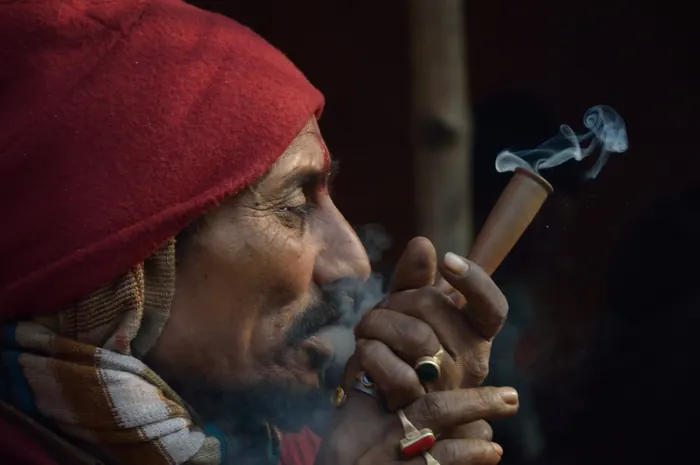
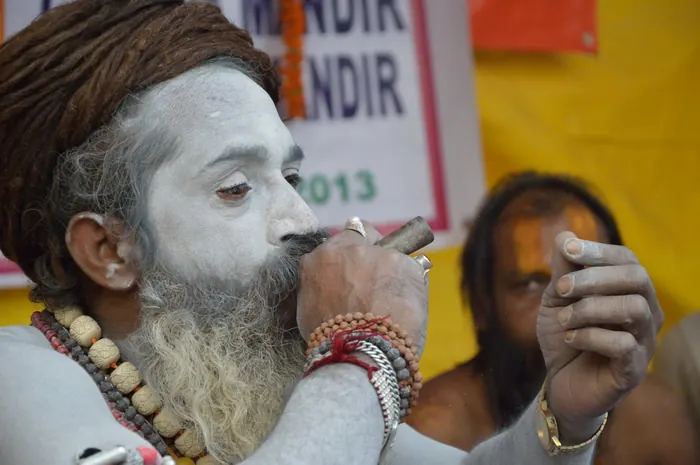
The Atharvaveda names bhanga among sacred plants. Today bhang is offered or consumed in some Shaiva traditions, especially around Mahashivratri, and some sadhus ritually smoke cannabis in chillums; many do not. The stories of how Shiva came to it vary by region.
Bhang thandai is a recognised Holi tradition in parts of northern India: leaf bhang ground with milk, nuts, seeds, pepper and spices. Bhang also goes into festival sweets and savouries.
Some Nihang groups prepare sukha, or shaheedi degh, around Hola Mohalla. The Sikh Rehat Maryada itself forbids intoxicants, so this is a distinct Nihang tradition, not a Sikh custom.
Roasted hemp seed is used in traditional Himalayan food, including Uttarakhand's sharp, tangy chutney. Uttarakhand seed tested at about 20.4% protein, 28.7% fat and 26.8% fibre, with omega-6 and omega-3 near the ideal 3:1.
Himalayan artisans have used hemp fibre for rope and handmade footwear, including pahadi pulla slippers. Himachal's registered GI craft is Lahauli Knitted Socks & Gloves; pulla footwear has no GI of its own yet, and could earn one with proper documentation.
Hill households extracted the fibre by hand, spun it on a drop spindle and wove it on a waist loom into grain sacks, ropes and floor mats.
Licensed bhang retail operates in certain states and cities under state excise law, in temple towns and tourist centres. There is no single national licence: some states license shops, some need permits, and some prohibit bhang.
The Himalaya is a major centre of Indian crop diversity. Eradication drives and imported hybrids may threaten local cannabis populations, and India still has no public count of them. Community seed banks and gene-bank accessions would protect them.
Back to soil: what the evidence says
Hemp roots reached 1.3 m one year and 2 m the next in a field study, with 2.41–3.21 t of root biomass a hectare. They add organic matter but cannot break rock or severe hardpan.
Dense fibre hemp suppressed weeds about as well as sorghum–Sudan grass in multi-year trials, and the next crop went in without ploughing.
Of water a season. Hemp is not a zero-water crop, but under the right conditions it needs less than cotton.
Visited hemp in one study. Its late pollen helps bees, but a mix of crops helps more than hemp alone. Grow it in rotation, not as a monoculture.
The whole-plant economy
| Part | Used for | What it does for the farm and the earth |
|---|---|---|
| Seed | Chutney, roasted snacks, oil, protein | Nutrition and farmer income |
| Leaf | Bhang where lawful, compost | Cultural use and recycled residue; needs legal controls |
| Flower and resin | Regulated medicine and adult products | Highest value, and highest legal and health risk |
| Bast fibre | Rope, sacks, cloth, footwear, composites | Durable renewable fibre that can replace synthetics |
| Hurd | Hempcrete, boards, bedding, mulch | Stores plant carbon in long-lived products |
| Roots and residue | Left in the soil | Organic matter and channels in the soil |
| Dust and fines | Pellets, compost, boards, process heat | Cuts processing waste |
The greenest model is not a cannabis drinks business on its own. It is a licensed whole-crop biorefinery tied to local farms: seed for food, fibre for textiles, hurd for building, lawful leaf products, and clean residues back to the soil.
Festival-safe bhang
Edible bhang works slowly. It can take 30 minutes to 2 hours to start, up to 4 hours to peak, and last 12 hours or more. That delay is why people take a second glass and end up unwell. Regulation would put a labelled strength on every glass.
- Know the strength. Labelled, tested bhang, in measured servings.
- Start small and wait. Do not take more because you feel nothing yet.
- Keep it apart. Away from children and from ordinary sweets.
- No alcohol with it, and no driving after it.
- Offer a plain thandai for anyone who does not want bhang.
Eight value chains, not one drug
- Industrial hemp: state-licensed low-THC farming for fibre and seed, with certified seed and field testing.
- Traditional foods: standards for hemp seed, oil and regional products.
- Bhang: state excise licences, tested potency, measured servings and age limits.
- Native seed: community-led documentation, conservation plots and benefit sharing.
- Craft revival: producer co-operatives, fibre processing and honest labelling.
- Regenerative farming: rotation trials across India's climate zones.
- Whole-stalk industry: regional hubs that use every part of the stalk.
- Environmental proof: a life-cycle check behind every green claim.
धरती · Connection to the earth
इस मिट्टी का पौधा
भांग पूरे हिमालय में जंगली उगती है। किसी कानून का हिस्सा बनने से बहुत पहले यह भारत में पूजा, भोजन, रस्सी, चप्पल और त्योहारों का हिस्सा थी। धरती माँ से इसका रिश्ता लेन-देन का है: पौधे ने पहाड़ी समुदायों को खिलाया और पहनाया, और उन्होंने उसके बीज सहेजे और उसके उपयोग के नियम बनाए।
एक पौधा, कई उत्पाद। बीज भोजन है, तना रेशा और निर्माण सामग्री है, पत्ती भांग है, और फूल और राल गांजा और चरस हैं। इनमें से केवल आख़िरी तीन ही नशा करते हैं, और कानून इन्हें पहले से अलग मानता है। समझदार कानून पूरे पौधे पर रोक लगाने के बजाय हर उपयोग को अलग से लाइसेंस देगा।
एक पौधा, छह उत्पाद
| उत्पाद | पौधे का हिस्सा | क्या नशा होता है? | आज का कानून |
|---|---|---|---|
| हेम्प बीज | बीज | नहीं। कटाई के समय फूलों से लगे केवल अंश | फूल वाले शीर्षों के बिना हो तो NDPS की गांजा परिभाषा से बाहर |
| हेम्प रेशा | तने की बाहरी परत | नहीं | NDPS अधिनियम की धारा 14 के तहत राज्य रेशे, बीज या बागवानी के लिए खेती का लाइसेंस दे सकते हैं |
| हर्ड | तने का लकड़ी जैसा भीतरी भाग | नहीं | औद्योगिक सह-उत्पाद, फ़सल कैसे उगी उसी से तय |
| भांग | पत्तियाँ | हाँ, और तेज़ी बहुत अलग-अलग | केंद्रीय NDPS परिभाषा से बाहर; राज्यों के आबकारी कानून तय करते हैं |
| गांजा | फूल वाले शीर्ष | हाँ | NDPS अधिनियम के तहत प्रतिबंधित |
| चरस | राल | हाँ, अक्सर तेज़ | NDPS अधिनियम के तहत प्रतिबंधित |
हेम्प-बीज की चटनी भांग की ठंडाई नहीं है, और लंबे रेशे वाले हेम्प का घना खेत फूलों के लिए दूर-दूर लगाए पौधों से अलग फ़सल है।
जीवित परंपराएँ
अथर्ववेद भंगा को पवित्र पौधों में गिनता है। आज कुछ शैव परंपराओं में, ख़ासकर महाशिवरात्रि पर, भांग चढ़ाई या ग्रहण की जाती है, और कुछ साधु चिलम में भांग पीते हैं; बहुत से नहीं पीते। शिव से इसके जुड़ने की कथाएँ क्षेत्र के हिसाब से बदलती हैं।
उत्तर भारत के कुछ हिस्सों में भांग की ठंडाई होली की जानी-मानी परंपरा है: दूध, मेवे, बीज, काली मिर्च और मसालों के साथ पिसी पत्ती वाली भांग। भांग त्योहार की मिठाइयों और नमकीन में भी डलती है।
कुछ निहंग जत्थे होला मोहल्ला के आसपास सुक्खा, या शहीदी देग, बनाते हैं। सिख रहत मर्यादा ख़ुद नशे की मनाही करती है, इसलिए यह निहंगों की अलग परंपरा है, सिख रिवाज नहीं।
भुना हेम्प बीज पारंपरिक हिमालयी खाने में इस्तेमाल होता है, उत्तराखंड की तीखी-खट्टी चटनी समेत। उत्तराखंड के बीज में लगभग 20.4% प्रोटीन, 28.7% वसा और 26.8% रेशा पाया गया, और ओमेगा-6 व ओमेगा-3 लगभग आदर्श 3:1 अनुपात में।
हिमालयी कारीगर हेम्प के रेशे से रस्सी और हाथ की बनी चप्पलें बनाते आए हैं, पहाड़ी पुल्ला चप्पल समेत। हिमाचल का पंजीकृत GI शिल्प लाहौली बुने मोज़े और दस्ताने है; पुल्ला चप्पल का अपना GI अभी नहीं है, और सही दस्तावेज़ों से मिल सकता है।
पहाड़ी घर रेशा हाथ से निकालते, तकली पर कातते और कमर-करघे पर बुनकर अनाज के बोरे, रस्सियाँ और दरियाँ बनाते थे।
कुछ राज्यों और शहरों में, तीर्थ-नगरों और पर्यटन केंद्रों में, राज्य आबकारी कानून के तहत लाइसेंसशुदा भांग की बिक्री होती है। कोई एक राष्ट्रीय लाइसेंस नहीं है: कुछ राज्य दुकानों को लाइसेंस देते हैं, कुछ परमिट माँगते हैं, और कुछ भांग पर रोक लगाते हैं।
हिमालय भारत की फ़सल-विविधता का बड़ा केंद्र है। नष्ट करने के अभियान और विदेशी संकर किस्में स्थानीय भांग को ख़तरे में डाल सकती हैं, और भारत के पास अब तक इनकी कोई सार्वजनिक गिनती नहीं है। सामुदायिक बीज बैंक और जीन-बैंक इन्हें बचा सकते हैं।
मिट्टी में वापसी: सबूत क्या कहते हैं
एक खेत-अध्ययन में हेम्प की जड़ें एक साल 1.3 मीटर और अगले साल 2 मीटर तक गईं, प्रति हेक्टेयर 2.41–3.21 टन जड़-बायोमास के साथ। ये जैविक पदार्थ जोड़ती हैं पर चट्टान या बहुत सख़्त परत नहीं तोड़ सकतीं।
कई साल के प्रयोगों में घने रेशे वाले हेम्प ने ज्वार–सूडान घास जितना खरपतवार दबाया, और अगली फ़सल बिना जुताई के बोई गई।
पानी एक मौसम में। हेम्प बिना पानी की फ़सल नहीं है, पर सही हालात में कपास से कम पानी लेता है।
एक अध्ययन में हेम्प पर आईं। इसका देर से आने वाला पराग मधुमक्खियों की मदद करता है, पर कई फ़सलों का मेल अकेले हेम्प से ज़्यादा मदद करता है। इसे फ़सल-चक्र में उगाइए, अकेली फ़सल के रूप में नहीं।
पूरे पौधे की अर्थव्यवस्था
| हिस्सा | उपयोग | खेत और धरती के लिए क्या करता है |
|---|---|---|
| बीज | चटनी, भुने नाश्ते, तेल, प्रोटीन | पोषण और किसान की आमदनी |
| पत्ती | जहाँ वैध हो वहाँ भांग, खाद | सांस्कृतिक उपयोग और अवशेष का पुनर्चक्रण; कानूनी नियंत्रण ज़रूरी |
| फूल और राल | नियंत्रित दवा और वयस्क उत्पाद | सबसे ज़्यादा क़ीमत, और सबसे ज़्यादा कानूनी व स्वास्थ्य जोखिम |
| रेशा | रस्सी, बोरे, कपड़ा, चप्पल, कंपोज़िट | टिकाऊ, फिर उगने वाला रेशा, जो सिंथेटिक की जगह ले सकता है |
| हर्ड | हेम्पक्रीट, बोर्ड, बिछावन, मल्च | पौधे का कार्बन लंबे चलने वाले उत्पादों में सहेजता है |
| जड़ें और अवशेष | मिट्टी में छोड़े जाते हैं | मिट्टी में जैविक पदार्थ और रास्ते |
| धूल और बारीक कण | पेलेट, खाद, बोर्ड, भट्ठी की गर्मी | प्रोसेसिंग का कचरा घटाते हैं |
सबसे हरित मॉडल अकेला भांग-पेय का धंधा नहीं है। यह स्थानीय खेतों से जुड़ी लाइसेंसशुदा पूरी-फ़सल बायोरिफ़ाइनरी है: भोजन के लिए बीज, कपड़े के लिए रेशा, निर्माण के लिए हर्ड, वैध पत्ती उत्पाद, और साफ़ अवशेष वापस मिट्टी में।
त्योहार में सुरक्षित भांग
खाने वाली भांग धीरे असर करती है। असर शुरू होने में 30 मिनट से 2 घंटे, पूरा असर आने में 4 घंटे तक, और असर 12 घंटे या उससे ज़्यादा रह सकता है। इसी देरी के कारण लोग दूसरा गिलास ले लेते हैं और तबीयत बिगड़ जाती है। नियमन हर गिलास पर लिखी हुई तेज़ी देगा।
- तेज़ी जानिए। लेबल वाली, जाँची हुई भांग, नपी-तुली मात्रा में।
- थोड़ा लीजिए और रुकिए। असर न लगे तो भी और मत लीजिए।
- अलग रखिए। बच्चों और आम मिठाइयों से दूर।
- साथ में शराब नहीं, और बाद में गाड़ी नहीं।
- सादी ठंडाई भी रखिए उनके लिए जो भांग नहीं चाहते।
आठ मूल्य-श्रृंखलाएँ, एक नशा नहीं
- औद्योगिक हेम्प: रेशे और बीज के लिए राज्य-लाइसेंसशुदा कम-THC खेती, प्रमाणित बीज और खेत में जाँच के साथ।
- पारंपरिक भोजन: हेम्प बीज, तेल और क्षेत्रीय उत्पादों के मानक।
- भांग: राज्य आबकारी लाइसेंस, जाँची हुई तेज़ी, नपी मात्रा और उम्र की सीमा।
- देसी बीज: समुदाय के नेतृत्व में दस्तावेज़, संरक्षण के खेत और लाभ में हिस्सेदारी।
- शिल्प का पुनर्जीवन: उत्पादक सहकारी समितियाँ, रेशा प्रोसेसिंग और सच्चे लेबल।
- पुनर्योजी खेती: भारत के जलवायु क्षेत्रों में फ़सल-चक्र के प्रयोग।
- पूरे तने का उद्योग: क्षेत्रीय केंद्र जो तने का हर हिस्सा इस्तेमाल करें।
- पर्यावरण का सबूत: हर हरित दावे के पीछे जीवन-चक्र आकलन।
- Karki and Rangaswamy (2023): historical context of cannabis use in India
- Report of the Indian Hemp Drugs Commission, 1893–94
- BBC: bhang and Shiva worship in Varanasi
- News9: the history of bhang thandai
- SGPC: Sikh Rehat Maryada (English)
- Cannabis and Sikhism: sukha and shaheedi degh
- The Pharma Journal (2022): nutrition of Uttarakhand hemp seed
- Hemp seed omega-6 to omega-3 ratio (review)
- Himalayan Kraft: pahadi pulla chappals
- IP India: GI register (Lahauli Knitted Socks & Gloves)
- Atmos: rebuilding a hemp ecosystem in the high Himalaya
- Department of Revenue: National Policy on NDPS (bhang)
- NDPS Act, Section 2: definitions
- Centre for Aromatic Plants, Uttarakhand: industrial hemp licences
- National Biodiversity Authority: agrobiodiversity and benefit sharing
- Plant and Soil: hemp roots to 1.3–2 m
- Rodale Institute: hemp weed-suppression trials
- Hemp water use: a scoping review
- The bee community of hemp: 16 species
- Portland State: hemp carbon review (1.37–1.6 t CO₂ per tonne)
- Health Canada: how edibles act (onset and duration)
पत्र · The letter
Every milestone sends a letter to the ministries
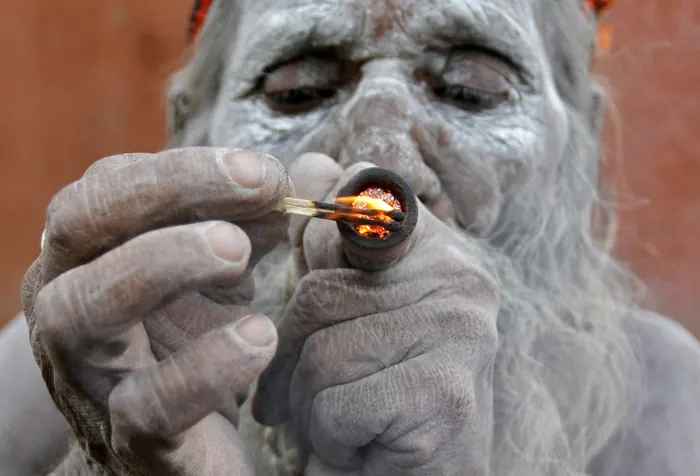
Preview of the next letter
Write to them yourself
The people who can change the law
No public email? Use these
Read the sample letter
The Vijaya model: what we are asking for
Not a free-for-all. A careful, step-by-step path, built on what has worked abroad and on India's own traditions.
- Publish the review. Make public the outcome of the stakeholder consultation the Delhi High Court ordered on 23 January 2026, with the evidence behind it.
- Stop jailing users. Amend Section 27 of the NDPS Act so that possessing or using a small quantity is no longer a crime, as the Ministry of Social Justice recommended in 2021. Offer treatment to those who want it, and clear old small-quantity records.
- A national hemp mission. License industrial hemp in every willing state, with certified seed at or below 0.3% THC, decortication hubs near farms, and BIS standards for hemp fibre and hempcrete.
- Medical cannabis for patients. Let doctors and vaidyas prescribe cannabis medicines from licensed Indian producers, and fund research through Ayush, ICMR and CSIR.
- Regulated adult use, in phases. Licensed shops, age 21 and over, tested products with THC and CBD on the label, no advertising aimed at the young, and limits on potency.
- Put the money to work. Use cannabis tax for de-addiction and mental health services, farmer support in the hills, and training for workers moving out of brick kilns.
How it works
- Open the site. You are counted as live while the tab stays open.
- Click to support. Every click is added to your state and city.
- When both targets for a milestone are met, the coalition's letter is emailed from this website with a state- and city-wise data file attached.
- The letter and any reply are published here.
विजया मॉडल: हम क्या माँग रहे हैं
बेलगाम छूट नहीं। एक सावधान, क़दम-दर-क़दम रास्ता, जो विदेशों के सफल अनुभव और भारत की अपनी परंपराओं पर बना है।
- समीक्षा सार्वजनिक करें। 23 जनवरी 2026 को दिल्ली उच्च न्यायालय द्वारा आदेशित हितधारक परामर्श का परिणाम, उसके पीछे के प्रमाणों के साथ, सार्वजनिक किया जाए।
- उपभोक्ताओं को जेल भेजना बंद करें। NDPS कानून की धारा 27 में संशोधन हो ताकि थोड़ी मात्रा रखना या सेवन करना अपराध न रहे, जैसा सामाजिक न्याय मंत्रालय ने 2021 में सुझाया था। जो चाहें उन्हें इलाज मिले, और थोड़ी मात्रा के पुराने रिकॉर्ड मिटाए जाएँ।
- राष्ट्रीय हेम्प मिशन। हर इच्छुक राज्य में औद्योगिक हेम्प को लाइसेंस मिले, 0.3% या कम THC वाले प्रमाणित बीज, खेतों के पास रेशा निकालने के केंद्र, और हेम्प रेशे व हेम्पक्रीट के लिए BIS मानक हों।
- मरीज़ों के लिए चिकित्सीय भांग। डॉक्टर और वैद्य लाइसेंसशुदा भारतीय उत्पादकों की भांग दवाएँ लिख सकें, और आयुष, ICMR और CSIR के ज़रिए शोध को धन मिले।
- चरणबद्ध, नियंत्रित वयस्क उपयोग। लाइसेंसशुदा दुकानें, 21 साल और उससे ऊपर, लेबल पर THC और CBD के साथ जाँचे हुए उत्पाद, युवाओं को लक्ष्य करने वाले विज्ञापन पर रोक, और ताक़त की सीमा।
- पैसे का सही इस्तेमाल। भांग से आए कर को नशामुक्ति और मानसिक स्वास्थ्य सेवाओं, पहाड़ी किसानों की मदद, और ईंट-भट्ठों से निकलते कामगारों के प्रशिक्षण पर लगाया जाए।
यह कैसे काम करता है
- साइट खोलिए। टैब खुला रहने तक आप लाइव गिने जाते हैं।
- समर्थन के लिए क्लिक कीजिए। हर क्लिक आपके राज्य और शहर के खाते में जुड़ता है।
- किसी पड़ाव के दोनों लक्ष्य पूरे होते ही गठबंधन का पत्र इसी वेबसाइट से, राज्य- और शहर-वार आँकड़ों की फ़ाइल के साथ ईमेल किया जाता है।
- पत्र और कोई भी जवाब यहीं प्रकाशित होता है।